Bidar is a predominantly agricultural district in northern Karnataka, where dryland farming plays an important role. Jowar is a major crop, while red gram, green gram, black gram, Bengal gram, groundnut, wheat, paddy and chilli are also grown across the district. These crops create opportunities for better post-harvest handling, moisture management and value-added processing for farmers, households and agro-enterprises.
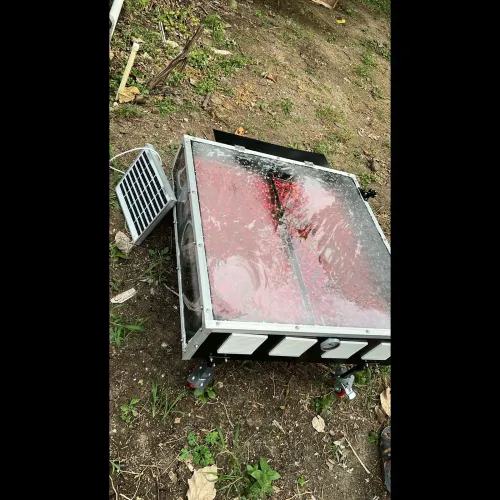
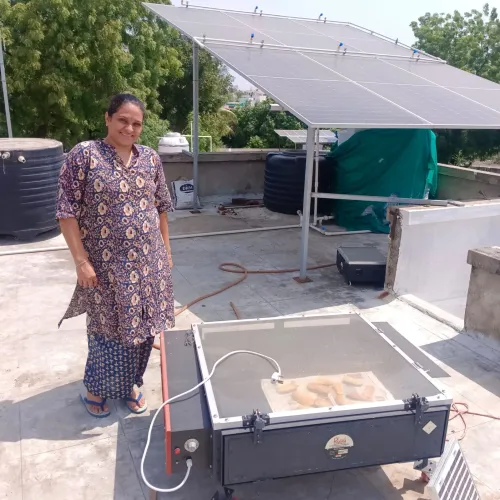
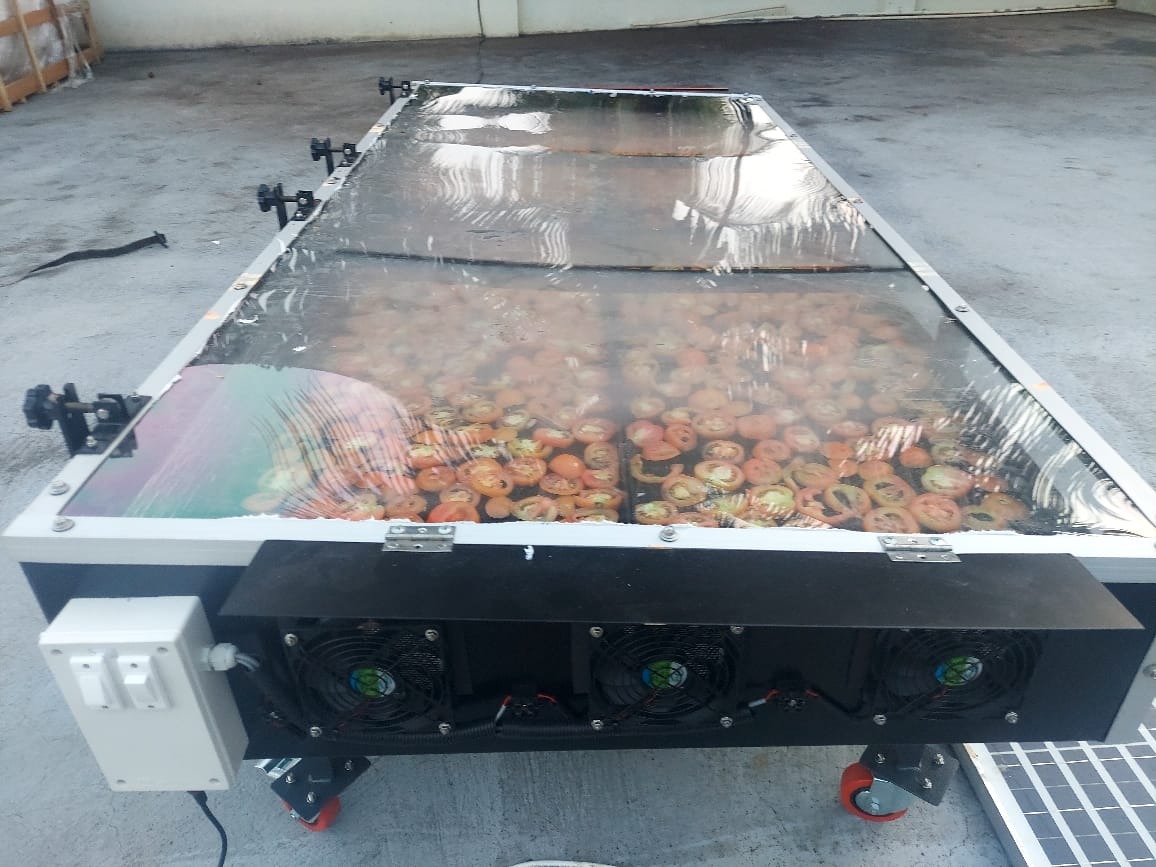
A Rudra Solar Dryer provides an enclosed drying environment with managed airflow for suitable agricultural and food products. Depending on the selected model and fresh-input capacity, solar drying can be considered by individual users, farmers, women entrepreneurs, SHGs, FPOs, pulse processors, seed handlers, small businesses and larger commercial processing units.
1. Which crops can be processed in a solar dryer in Bidar?
Suitable solar drying applications in Bidar can include jowar, red gram, green gram, black gram, Bengal gram, groundnut, chilli, selected grains, seeds, herbs, vegetables and other compatible agricultural products.
Bidar’s official district profile specifically identifies jowar as a major crop and also lists pulses, groundnut, wheat, paddy and chilli among important agricultural commodities.
The drying method should be selected according to the commodity, starting moisture, loading, airflow requirement and intended final use rather than applying one fixed drying condition to every crop.
2. Why can solar drying be useful in a dryland farming district like Bidar?
Even in a dryland agricultural region, open-sun drying exposes produce directly to dust, insects, animals, wind and changing weather conditions.
An enclosed solar dryer can help provide:
- Reduced direct exposure to dust and insects
- More organised batch handling
- Managed airflow through the drying chamber
- Reduced dependence on open-ground drying
- Better control over tray loading and workflow
- A more protected process for value-added products
Actual drying performance still depends on solar radiation, humidity, product moisture, preparation and loading conditions.
3. Can jowar and other grains be dried using a solar dryer?
Yes, where controlled moisture reduction is required for storage, processing or another suitable post-harvest objective.
For jowar, wheat, paddy and other grains, important factors include:
- Initial moisture
- Required final moisture
- Food, milling, storage or seed use
- Loading depth
- Airflow
- Batch quantity
- Ambient conditions
Because jowar is a major Bidar crop, grain moisture management can be a relevant solar drying application for suitable requirements.
4. Can red gram, green gram, black gram and Bengal gram be processed using a solar dryer?
Yes, for suitable pulse drying and moisture-management requirements.
Bidar has a strong pulse-growing context, including red gram, green gram, black gram and Bengal gram.
For pulse applications, drying should be planned according to the initial moisture, storage or processing objective and final moisture requirement. Seed lots intended for planting require additional care so that inappropriate temperature or excessive drying does not affect germination quality.
This makes application-specific airflow, loading and moisture management more important than simply using a fixed drying time.
5. Can chilli and groundnut also be processed in a solar dryer in Bidar?
Yes, depending on the final product and processing requirement.
Chilli and groundnut are both documented agricultural crops in Bidar.
Chilli may be dried whole or in a suitable prepared form before further processing. If chilli powder is required, grinding is a separate step after drying.
Groundnut and other oilseed-related products require careful moisture management according to whether they are intended for food, storage, further processing or seed use.
6. Is Rudra Solar Dryer suitable only for commercial processors?
No. A solar dryer can be selected for different scales of use.
Depending on the model and capacity, Rudra Solar Dryer solutions can serve:
individual users, households, farmers, women entrepreneurs, SHGs, FPOs, pulse processors, seed handlers, rural businesses, MSMEs and commercial agro-processing units.
A farmer or household processing smaller batches will have a different capacity requirement from an FPO or commercial processor handling regular larger volumes.
The model should therefore be selected according to actual fresh-input quantity per batch.
7. How do I choose the best solar dryer or solar dryer manufacturer in India for Bidar?
A customer searching for the best solar dryer, top solar dryer, solar dryer in India or solar dryer manufacturer in India should compare practical system capabilities instead of depending only on advertising claims.
Important points include:
- Enclosed drying chamber
- Managed airflow
- Clearly defined fresh-input capacity
- Multiple available models and capacities
- Suitability for grains, pulses, chilli and other commodities
- Tray and material options
- Low-maintenance construction
- Backup options where applicable
- Installation and operating guidance
- Experience across household, farmer and commercial requirements
The best solar dryer for a buyer is the system that correctly matches the commodity, batch quantity, moisture-removal objective and operating conditions.
8. Why consider Rudra Solar Energy for a solar dryer in Bidar, Karnataka?
Rudra Solar Energy is an Indian solar dryer manufacturer offering different solar dryer models and capacities for agricultural, food-processing and value-addition requirements.
For Bidar, applications can be evaluated around jowar, red gram, green gram, black gram, Bengal gram, chilli, groundnut, grains, seeds and other suitable agricultural products.
Rudra Solar Dryers are designed around protected drying, managed airflow and practical batch handling, with model selection based on the actual crop and fresh-input requirement.
Customers from Bidar, Bhalki, Basavakalyan, Humnabad, Aurad, Kamalnagar, Hulsoor, Chittguppa and surrounding areas can enquire for requirements ranging from one household or farmer unit to SHG/FPO projects, pulse or seed processing and larger commercial operations. Bidar district’s official mapping identifies these taluk areas, which also gives us useful local-search coverage without inventing locations.
Looking for a solar dryer in Bidar, Karnataka? Contact Rudra Solar Energy with your crop or product, fresh-input quantity, required capacity and intended application to identify a suitable solar dryer model.
Keywords