Ballari is a major agricultural district of Karnataka where farming supports a large part of the local workforce. Important crops include groundnut, sunflower, jowar, rice, cotton and other cereals, creating opportunities for better post-harvest handling, moisture management and value-added processing.
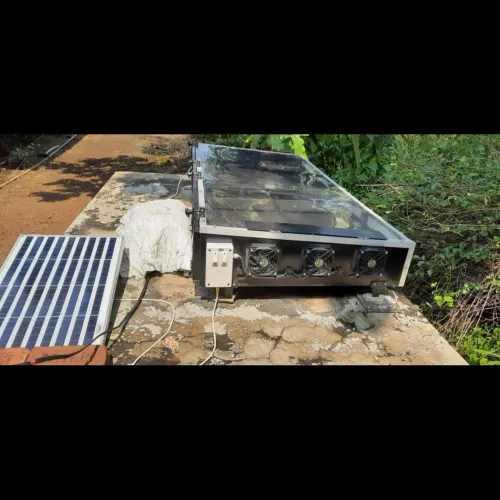
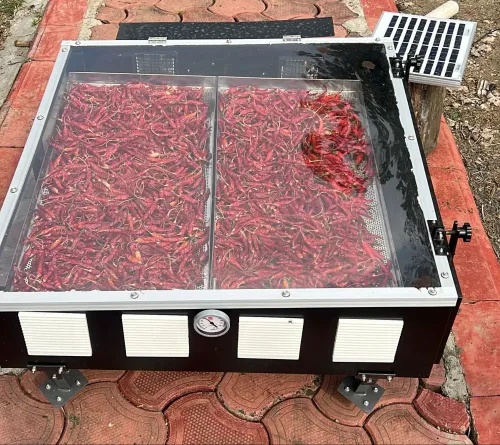
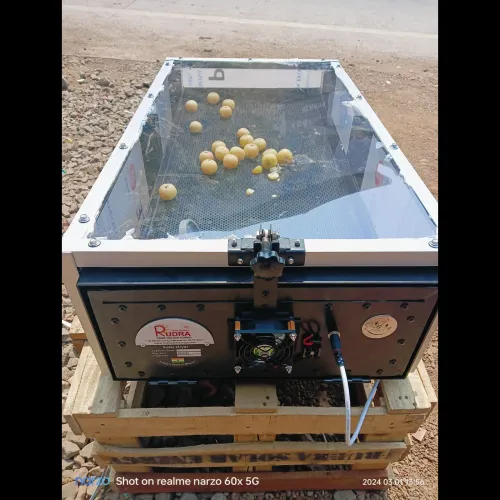
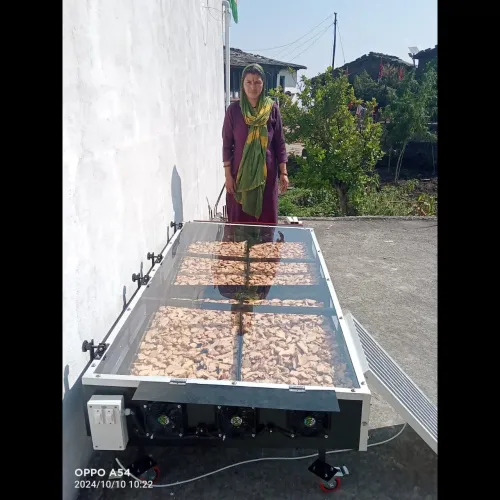
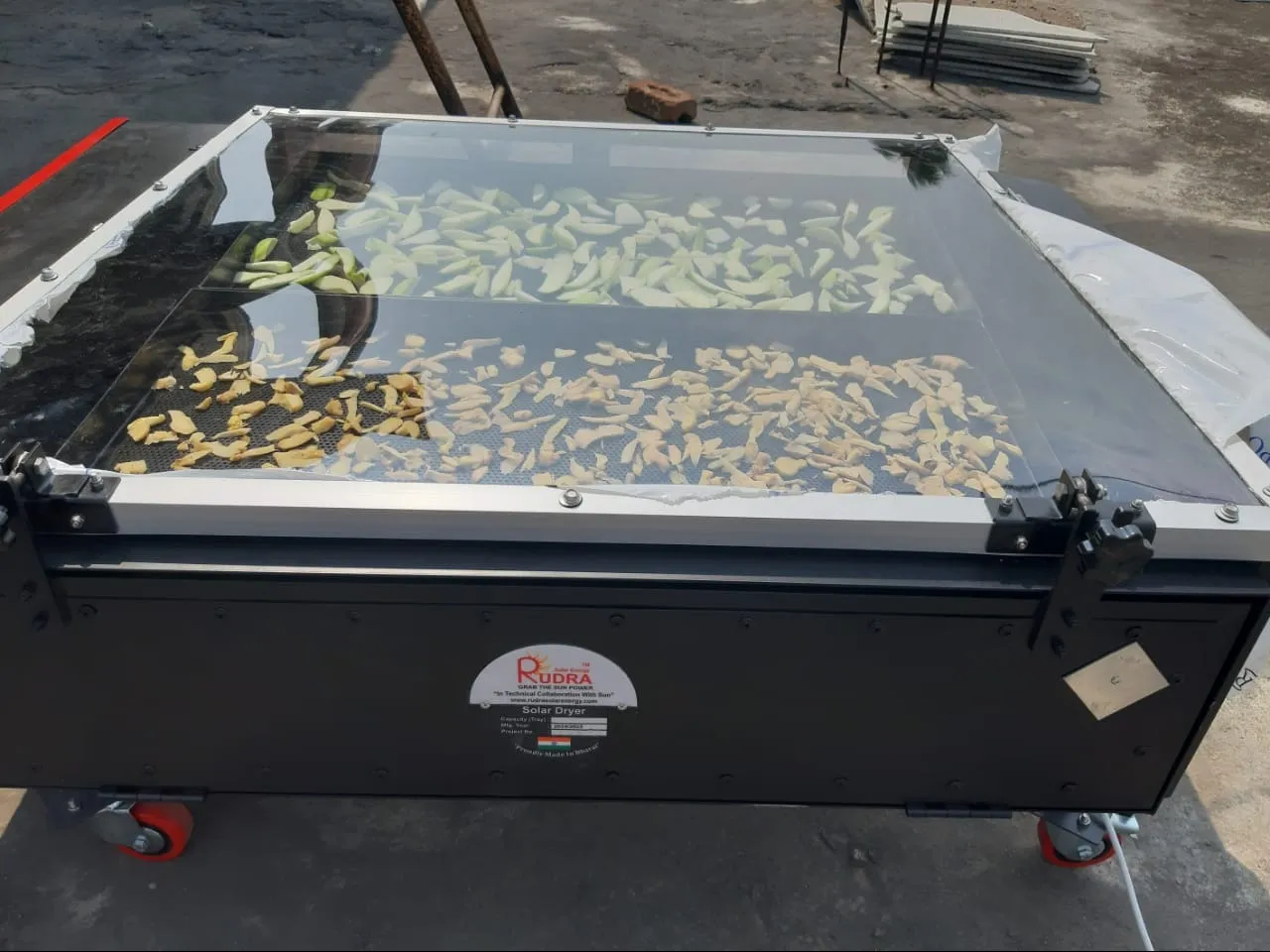
A Rudra Solar Dryer can provide an enclosed and managed drying environment for suitable agricultural, food and seed applications. Depending on the model and requirement, solar drying can be considered by individual users, households, farmers, FPOs, SHGs, rural entrepreneurs, seed handlers, small processors and larger commercial processing units.
1. Which crops can be processed using a solar dryer in Ballari?
Solar drying in Ballari can be explored for suitable applications involving groundnut, sunflower seeds, jowar/sorghum, rice or paddy, selected cereals, pulses, seeds, vegetables, spices and other compatible agricultural products.
Ballari’s official district profile identifies groundnut, rice, sunflower, jowar and cereals among its important crops.
The drying requirement should always be decided according to the exact commodity, its starting moisture, intended end use and required final moisture rather than using one fixed setting for every crop.
2. Why can farmers in Ballari use an enclosed solar dryer instead of only open-sun drying?
Open-sun drying exposes produce directly to dust, insects, animals, changing weather and open-ground handling.
An enclosed solar drying system can provide:
- Protected batch handling
- Reduced direct exposure to dust and insects
- Organized tray or product loading
- Managed movement of heated air
- Better-defined processing workflow
- Less dependence on open drying areas
Drying performance still depends on solar radiation, ambient humidity, product moisture, airflow, loading depth and preparation.
3. Can groundnut and sunflower be dried in a solar dryer?
Yes, where controlled moisture reduction is appropriate for the intended product or post-harvest requirement.
Groundnut and sunflower are both relevant crops in Ballari. Solar drying may be considered for suitable groundnut, kernel, seed or sunflower-seed applications depending on harvesting condition, storage objective and further processing.
Oilseeds require careful moisture management because over-drying or inappropriate heating can affect product quality and intended use. The operating approach therefore needs to be selected according to the actual crop and final application.
4. Can a solar dryer be used for jowar, rice and other grains in Ballari?
Yes, for suitable grain moisture-reduction and post-harvest applications.
Jowar and rice are important Ballari crops, while cereals form another significant part of local agriculture.
For grain-related drying, important considerations include:
- Initial moisture level
- Required final moisture
- Whether the crop is for food, storage, milling or seed
- Loading depth
- Airflow
- Batch quantity
- Weather conditions
Seed intended for planting requires additional care because excessive temperature or improper drying can affect germination quality.
5. Is a solar dryer useful only for big commercial processors?
No.
Rudra Solar Dryer requirements can range from one small unit for an individual or household user to farm-level, micro-enterprise and commercial processing systems.
Depending on capacity and application, potential users can include:
households, individual farmers, women entrepreneurs, SHGs, FPOs, seed processors, rural businesses, agro-processors and commercial food-processing units.
The system should be selected according to fresh-input quantity and actual batch requirement rather than simply choosing the largest available dryer.
6. How should I choose the correct solar dryer capacity in Ballari?
The correct capacity depends on fresh material entering the dryer, not only on the final dried-product quantity.
Before selecting a solar dryer, consider:
- Fresh-input kilograms per batch
- Product type and bulk density
- Tray loading
- Required number of batches
- Initial and target moisture
- Household, farm or business use
- Seasonal peak requirement
- Future expansion plans
- Solar-only or hybrid requirement where applicable
A farmer processing seasonal groundnut or grains may need a very different configuration from a food-processing enterprise operating throughout the year.
7. How do I identify the best solar dryer manufacturer for my requirement?
The best solar dryer should not be selected only from an advertising claim or lowest price.
A buyer should compare whether the manufacturer can provide:
- Enclosed and protected drying
- Proper airflow management
- Clearly defined fresh-input capacities
- Multiple capacity options
- Commodity-specific application guidance
- Appropriate product-contact materials
- Solar-only and hybrid options where required
- Support for household, farm and commercial applications
- Practical understanding of moisture, loading and end-use requirements
A capable solar dryer manufacturer in India should first understand what the customer wants to dry, how much fresh material is handled and what final product is required before recommending a model.
8. Why consider Rudra Solar Energy for a solar dryer in Ballari, Karnataka?
Rudra Solar Energy develops solar drying solutions for diverse agricultural, food-processing and value-addition requirements.
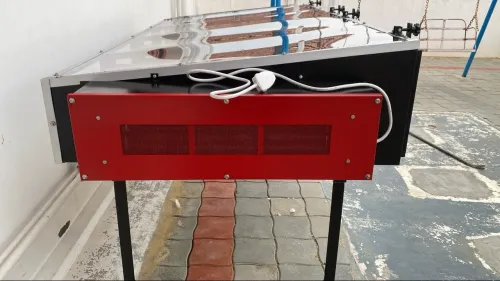
Depending on the selected system, Rudra solutions can offer enclosed drying chambers, managed airflow, solar-powered air movement, multiple capacities and suitable hybrid configurations where required.
For Ballari, solar dryer applications can be evaluated around locally relevant opportunities such as groundnut, sunflower seeds, jowar, rice, cereals, pulses, seeds and other suitable agricultural products.
Whether the requirement is for one individual unit, household use, a farmer, an SHG/FPO, a small processing business or a larger commercial facility, system selection can be matched to the commodity, fresh-input quantity and intended end use.
Looking for a solar dryer in Ballari, Karnataka? Contact Rudra Solar Energy with your crop, fresh-input quantity, required batch capacity and final application to identify a suitable solar drying solution.
Keywords