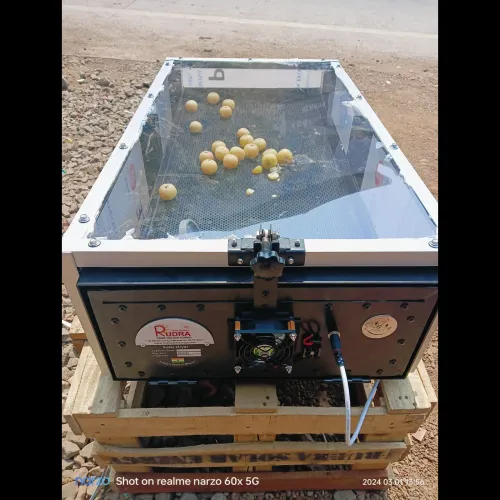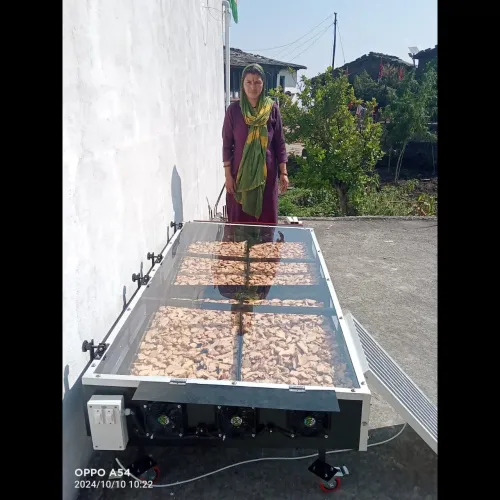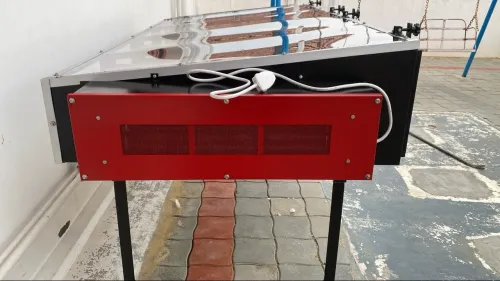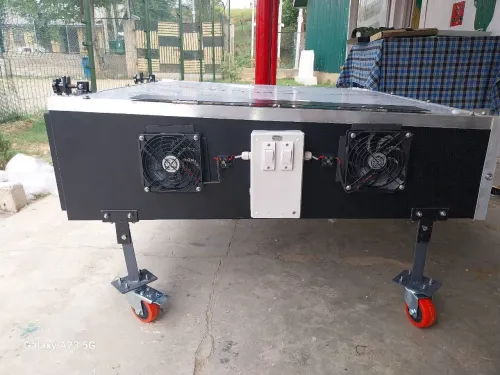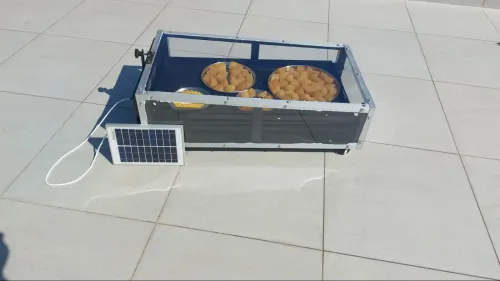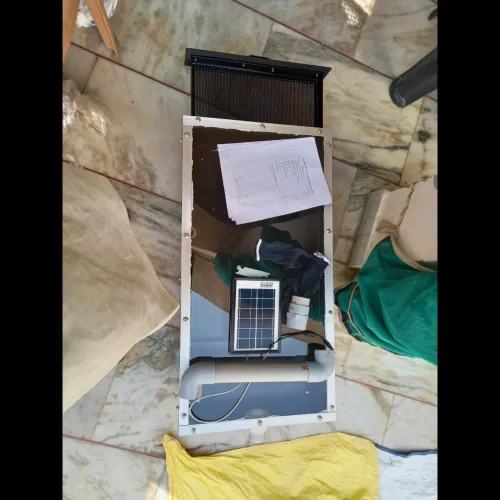
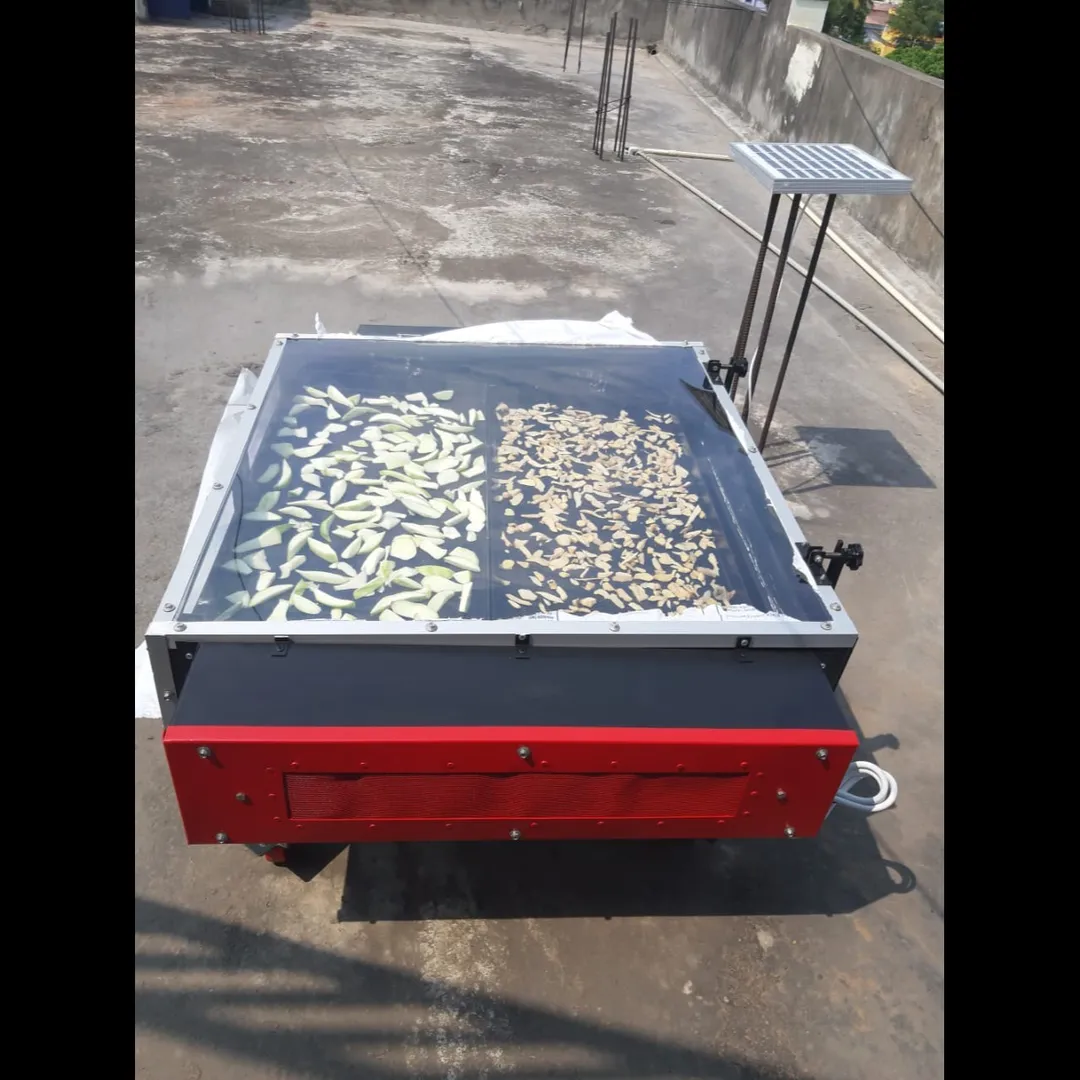
Bagalkot is one of North Karnataka’s important agricultural and horticultural districts, with strong activity around pomegranate, grapes, onion, maize, pulses, millets, vegetables, spices and other suitable crops. For farmers, households, entrepreneurs and processors handling seasonal produce, drying can be an important part of post-harvest management and value addition when it is matched correctly to the commodity and intended final product.
A Rudra Solar Dryer provides an enclosed drying environment with managed airflow for suitable agricultural, horticultural and food products. Systems can be considered for individual users, households, farmers, women entrepreneurs, SHGs, FPOs, small businesses and commercial processing units, depending on fresh-input quantity, product characteristics and required batch scale.
1. Which crops can be processed in a solar dryer in Bagalkot?
Suitable solar drying applications in Bagalkot can include prepared fruits, vegetables, onion, herbs, spices, selected pulses, grains, seeds and other agricultural or horticultural products.
Bagalkot’s horticultural base includes crops such as pomegranate, grapes, banana, lime, sapota, ber, fig, vegetables, spices and medicinal or aromatic plants, while ICAR also identifies maize, pulses, onion and millets among important district commodities.
The drying process should always be selected according to the exact crop, preparation method and intended end product rather than applying one setting to every commodity.
2. Why can a solar dryer be useful compared with open-sun drying in Bagalkot?
Open-sun drying directly exposes produce to the surrounding environment and offers limited control over handling and airflow.
An enclosed solar dryer can provide a more protected and organized drying environment, helping reduce direct exposure to dust, insects and open-ground contamination while allowing airflow to be managed through the drying chamber.
Actual drying performance still depends on factors such as solar radiation, ambient humidity, initial moisture, product size, preparation, tray loading and target final moisture.
3. Can pomegranate and grapes be dried using a solar dryer in Bagalkot?
Yes, for suitable prepared forms and value-added products.
Bagalkot has a recognized horticultural base in both pomegranate and grapes. Depending on the intended product, solar drying may be considered for prepared fruit ingredients or selected dehydrated applications.
Pomegranate and grapes should not automatically be given the same drying conditions. Their moisture content, product structure, preparation and desired final product differ, so the dryer configuration and operating approach should be selected application by application.
4. Is a solar dryer suitable for onion, pulses, maize and millets in Bagalkot?
It can be suitable where moisture reduction or preparation of a dried product is part of the processing objective.
For example, onion may be processed into dried slices or flakes for suitable applications. Selected pulses, grains, millets and seeds may require moisture reduction depending on their starting moisture, storage objective, processing requirement or end use.
ICAR identifies onion, maize, pulses and millets among major commodities associated with FPO activity in Bagalkot, making post-harvest handling and processing especially relevant to the district.
For seed or grain applications, final moisture and seed viability where applicable must be considered carefully.
5. Is Rudra Solar Dryer only for commercial businesses?
No. Solar drying requirements can range from a single small user to a larger processing operation.
Depending on the selected capacity and application, a Rudra Solar Dryer can be relevant for households, individual buyers, farmers, home-based businesses, women entrepreneurs, SHGs, FPOs, micro-enterprises, food processors and commercial agro-processing units.
A person beginning with small batches should not necessarily purchase the same system as a larger processor handling regular bulk input. Capacity selection should match the actual fresh-input requirement and batch frequency.
6. How do I choose the right solar dryer capacity in Bagalkot?
Solar dryer capacity should not be selected only from the crop name or final dried-product weight.
The buyer should consider fresh-input quantity per batch, product bulk density, preparation or slice size, tray loading, frequency of processing, seasonal peak quantity, desired final product and expected future scale.
For example, a household or small entrepreneur processing limited batches will have a different requirement from an FPO or commercial food-processing unit handling regular volumes.
Choosing around actual fresh-input load helps avoid both under-sizing and unnecessary oversizing.
7. What should I look for when choosing the best solar dryer or solar dryer manufacturer?
Instead of depending only on claims such as “best solar dryer” or choosing purely by lowest price, buyers should evaluate the complete drying solution.
Important factors include the drying chamber design, airflow management, fresh-input capacity, product-contact materials, available capacities, suitability for different commodities, technical guidance, installation/application support and availability of solar-only or hybrid configurations where required.
A capable solar dryer manufacturer in India should be able to understand the buyer’s commodity, input quantity, moisture-removal requirement and intended end use before recommending a suitable system.
8. Why choose Rudra Solar Energy for a solar dryer in Bagalkot, Karnataka?
Rudra Solar Energy develops solar drying solutions for multiple agricultural, horticultural and food-processing applications, with systems designed around protected drying, managed airflow and different processing capacities.
For Bagalkot, applications can be evaluated around crops and value-addition opportunities such as pomegranate, grapes, onion, suitable vegetables, spices, pulses, millets, seeds and other locally relevant produce.
Whether the requirement is for one unit for household or individual use, a farmer-level dryer, an SHG or FPO project, a small business or a commercial processing facility, the appropriate solution should be selected according to the crop and actual fresh-input requirement.
Looking for a solar dryer in Bagalkot, Karnataka? Contact Rudra Solar Energy to discuss your commodity, fresh-input quantity, required batch capacity and intended application before selecting the suitable solar drying system.
Keywords