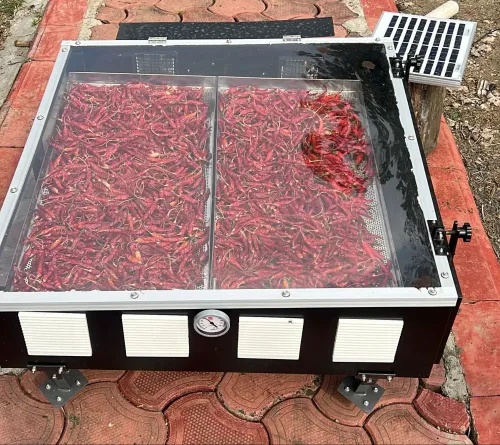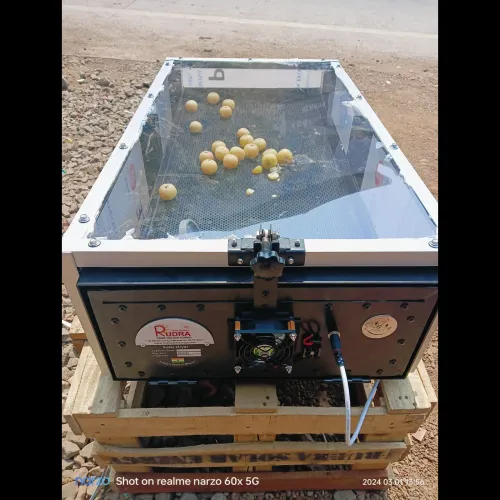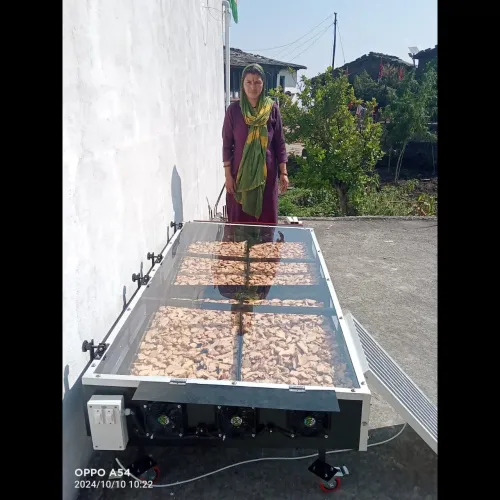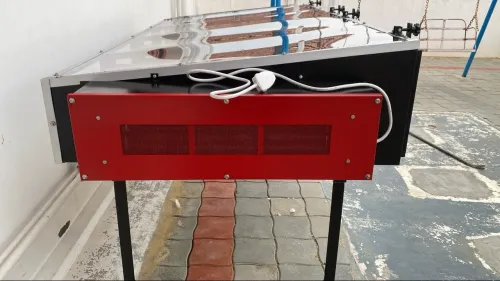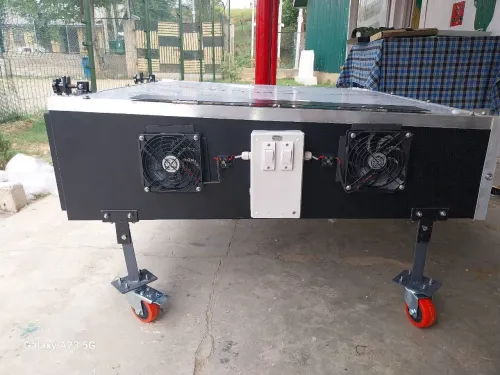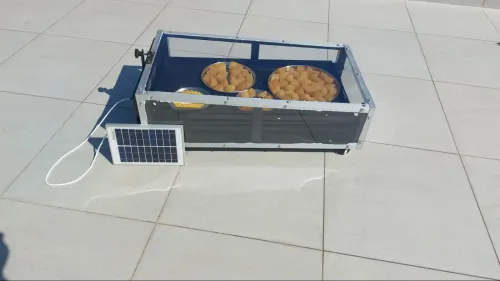
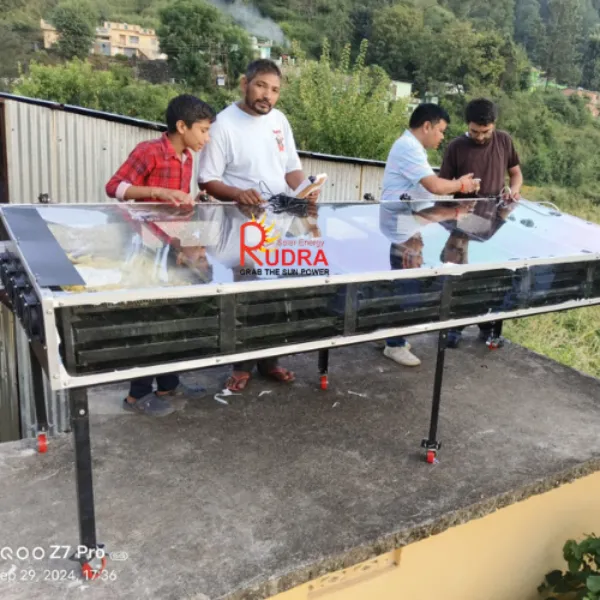
Ayodhya has a predominantly agriculture-based economy, creating practical opportunities for farmers, FPOs, SHGs and small food-processing enterprises to convert suitable farm produce into dried, value-added products. A commercial solar dryer can support cleaner and more controlled drying of fruits, vegetables, spices and selected agricultural produce compared with exposing material directly to open surroundings.
Ayodhya’s local agricultural extension activities make aonla and mango especially relevant for value-addition, while Krishi Vigyan Kendra Ayodhya also reports work involving cereal crops, vegetables, spices, medicinal plants and village-level SHG/FPE activities. This gives solar drying applications in the district a broader use case than focusing on only one seasonal crop.
What products can be dried in a solar dryer in Ayodhya?
Depending on preparation and the required final product, solar drying can be considered for aonla, mango, chilli, selected vegetables, spices, herbs and suitable agricultural produce.
Different commodities should not be treated as one identical drying load. Fresh fruit pieces, leafy material, spices and grains differ in initial moisture, piece thickness, tray loading and airflow requirements, so dryer selection and operating conditions should be planned according to the actual product.
Is a solar dryer useful for aonla processing in Ayodhya?
Yes, solar drying can be one stage in an aonla value-addition process. KVK Ayodhya specifically identifies aonla among crops used in village-level value-addition activities, making it a locally relevant application.
However, the dryer only performs the moisture-removal stage. Washing, cutting, deseeding, blanching or any other preparation required for a particular aonla product must be carried out separately before drying.
Can mango and other fruits be dried commercially?
Yes. Properly prepared mango slices and other suitable fruits can be dried in an enclosed solar drying system.
For commercial fruit drying, important factors include slice thickness, initial ripeness and moisture, tray loading, airflow, solar radiation and the target final moisture. KVK Ayodhya also identifies mango value addition among its local activities.
Can the same solar dryer be used for vegetables and spices?
A multi-purpose solar dryer can handle different compatible commodities in separate batches, but each product requires its own loading and drying approach.
KVK Ayodhya reports demonstrations involving vegetables and spices in aonla and mango orchards, which makes these applications particularly relevant for diversified farms in the district.
Strong-smelling or highly coloured products should also be handled with suitable cleaning and batch separation where necessary to reduce cross-contamination between products.
What solar dryer capacity is suitable for farmers, SHGs or FPOs in Ayodhya?
Capacity should be selected from the actual quantity to be processed per batch, not only from total farm production.
A smaller farmer or micro-enterprise may need a compact batch system, while an SHG, FPO or food-processing unit handling aggregated produce may require significantly larger usable tray area and airflow capacity.
Before selecting a system, consider:
- commodity and daily harvest volume
- fresh material weight per batch
- bulk density and slice thickness
- usable tray area
- seasonal processing days
- required production scale
- availability of backup heat during poor solar conditions
Does a 50 kg solar dryer mean it can dry 50 kg of every crop?
No. A nominal capacity should not be interpreted as identical practical loading for every commodity.
For example, leafy material may occupy considerably more tray area than a dense product of the same weight. Fruits can also carry much higher initial moisture than dried spices or grains. This is why product type, moisture load, tray area and airflow must be considered together while sizing a commercial solar dryer.
How long does solar drying take in Ayodhya?
There is no single drying time that is accurate for all products.
Actual drying duration depends on the commodity, initial and target moisture, slice thickness, preparation, tray depth, airflow, operating temperature, relative humidity, solar radiation and changing weather conditions.
Any supplier giving one fixed drying-time claim for every crop should therefore be treated cautiously.
What temperature is required for solar drying?
The required product temperature is commodity-specific.
Some commercial solar drying systems may be capable of operating across an approximate 50–80°C range under suitable conditions, but the highest available temperature is not automatically the correct temperature for every crop.
Delicate herbs, fruits, spices and other products should be processed according to their own quality and moisture-removal requirements rather than using one universal temperature setting.
Is a hybrid solar dryer useful during cloudy or humid conditions?
It can be useful where uninterrupted processing is important.
Solar drying performance naturally changes with solar radiation, ambient temperature and humidity. Where commercial production cannot wait for favourable sunshine, an appropriately designed solar-electric or other hybrid backup arrangement may help maintain the required drying environment.
Hybrid support does not remove the need for proper airflow, loading control or product-specific drying practice.
What is the price of a commercial solar dryer in Ayodhya?
Solar dryer price depends on the required capacity, usable tray area, construction, airflow arrangement, controls, hybrid backup and customization required for the product being processed.
For a meaningful quotation, the buyer should ideally provide:
product name + fresh quantity per batch + expected batches/day + location + whether hybrid backup is required.
Comparing systems only by their quoted “kg capacity” can be misleading if tray area, airflow and actual commodity loading are different.
How should buyers choose a solar dryer manufacturer for Ayodhya?
A commercial buyer should evaluate more than the advertised capacity.
Ask the manufacturer about:
- experience with the intended commodity
- usable drying/tray area
- airflow design
- food-contact construction where applicable
- operating-temperature behaviour
- solar fan or forced-air arrangement
- hybrid options if required
- installation and operator guidance
- after-sales support
- realistic drying expectations rather than guaranteed universal results
For farmers, SHGs, FPOs and processors in Ayodhya, the most suitable system is the one designed around the actual crop, batch requirement and processing objective, rather than simply choosing the largest number printed on a model.
Keywords