Madhubani is an agriculture-oriented district in Bihar’s Mithila region, with opportunities across food grains, pulses, horticultural produce, aquatic crops and rural food processing. Krishi Vigyan Kendra, Madhubani notes active vegetable and fruit production around its operational area, while official One District One Product listings identify Makhana, also known as fox nut, among Madhubani’s recognised agricultural products. Bihar’s major makhana-producing belt also includes Madhubani along with other north-eastern and Mithila-region districts.
This agricultural base creates opportunities for farmers, Farmer Producer Organizations, Self Help Groups, cooperatives and food-processing businesses to improve post-harvest handling and develop value-added products.
However, freshly harvested grains, vegetables, fruits, herbs and other agricultural materials often contain excess moisture. Washed or prepared products may contain even more surface moisture. Unless this moisture is reduced properly, products may become difficult to store, grade, mill, package or process further.
Traditional open-sun drying may expose products to:
- Dust and roadside pollution
- Insects, birds and animals
- Sudden rainfall
- Changing atmospheric humidity
- Contact with open floors or unclean sheets
- Uneven sunlight and airflow
- Moisture reabsorption during the evening
- Repeated handling and movement
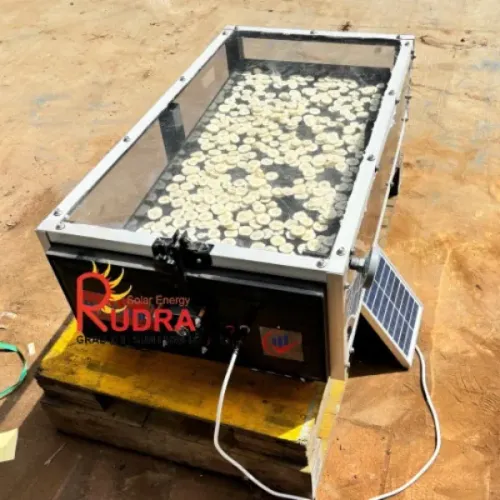
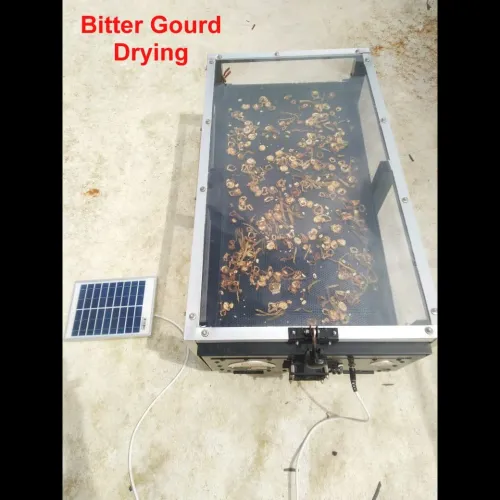
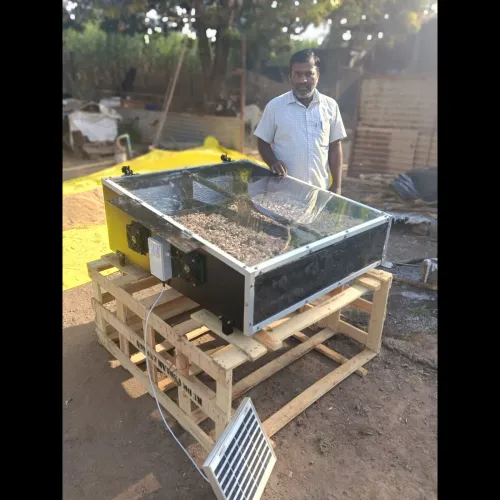
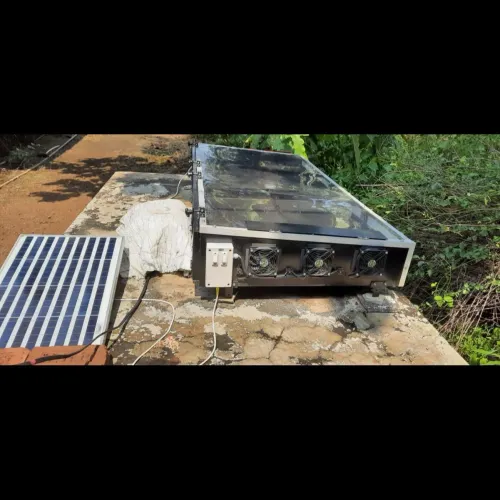
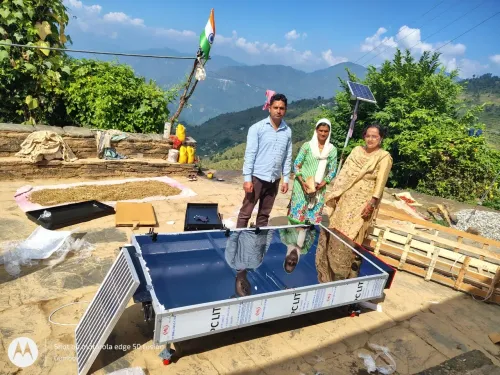
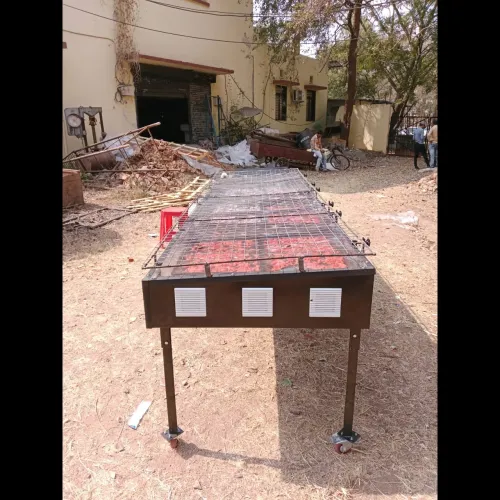
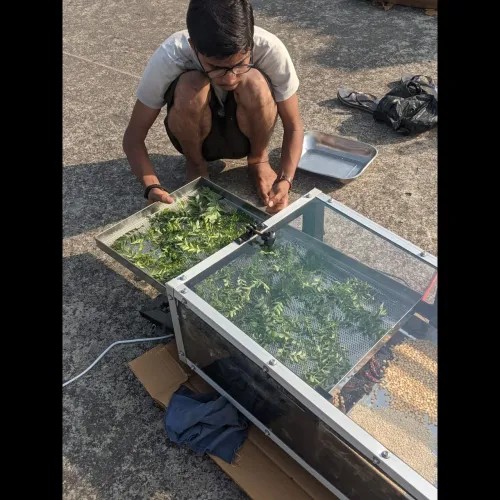
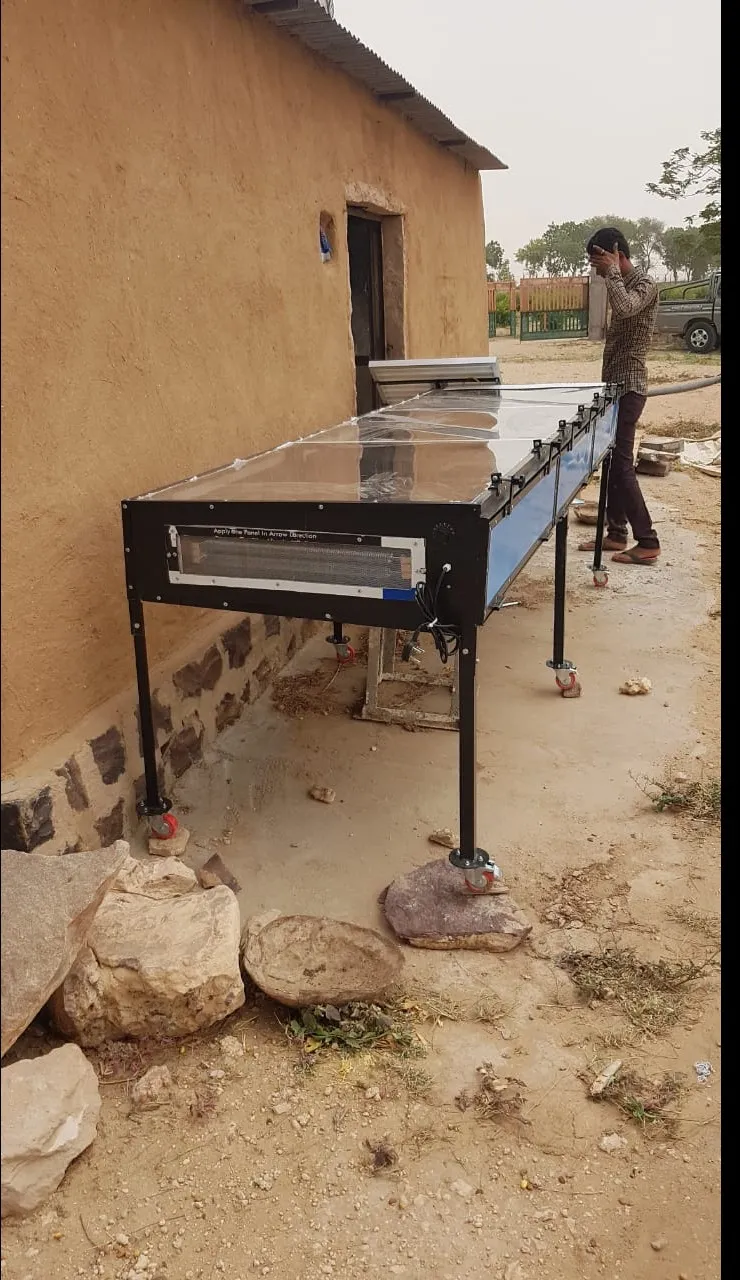
A Commercial Solar Dryer in Madhubani provides an enclosed, tray-based environment in which solar thermal energy and organised airflow help reduce moisture from technically suitable agricultural and food products.
The system does not replace every processing operation. It supports the drying or moisture-reduction stage, while cleaning, roasting, grading, milling, grinding, packaging and storage remain separate processes.
Solar Drying Applications for Makhana Processing
Makhana is one of the most relevant local products for Madhubani. Current ODOP material continues to recognise Madhubani’s association with makhana, alongside the district’s better-known handicraft products.
Makhana processing is a specialised sequence. It can involve pond-based cultivation, seed collection, cleaning, drying or conditioning, roasting, tempering, popping, grading and packaging.
A solar dryer should therefore not be presented as a machine that directly converts raw makhana seeds into fully popped makhana.
Depending on the processor’s existing method and technical requirement, a purpose-selected solar drying system may support suitable moisture-management stages such as:
- Moisture reduction in cleaned makhana seeds
- Drying or conditioning before selected downstream operations
- Moisture management after washing or cleaning
- Drying of suitable makhana-based ingredients
- Preparation of raw material for further roasting, popping or processing
- Controlled drying of makhana-related product batches where technically validated
The exact application must be evaluated carefully because the moisture requirement before roasting or popping can influence processing performance.
For makhana applications, the buyer should share:
- Exact stage of the product
- Current moisture level, if known
- Daily raw-material quantity
- Existing drying method
- Next processing step
- Required final moisture
- Roasting or popping arrangement
- Batch size
- Processing season
The dryer should be selected around the actual makhana-processing stage rather than using a generic capacity assumption.
Makhana-Based Value-Addition Opportunities
After the appropriate processing stages, makhana can support products such as:
- Graded popped makhana
- Flavoured makhana
- Roasted makhana snacks
- Makhana ingredients for sweets
- Makhana flour after separate grinding
- Packaged health-food products
- Bakery or snack ingredients
- Institutional food ingredients
Solar drying alone does not produce these finished products.
For example:
- Roasting requires separate equipment.
- Popping requires a specialised process.
- Flavouring requires separate coating or seasoning.
- Makhana flour requires grinding and sieving after suitable processing.
- Retail products require grading, packaging and labelling.
Rudra Solar Energy should therefore be positioned as supporting a suitable moisture-reduction stage within the broader makhana-processing line.
Solar Drying for Paddy, Wheat, Maize and Other Grains
Madhubani’s wider agricultural environment supports food-grain processing opportunities involving paddy, wheat, maize and related crops. These products may require moisture reduction before:
- Storage
- Milling
- Grading
- Transportation
- Packaging
- Seed preservation
- Further food processing
A suitable Commercial Solar Dryer can provide a more protected alternative to spreading grain on roadsides, courtyards or open grounds.
For grain applications, important factors include:
- Initial moisture
- Required final moisture
- Grain variety
- Loading depth
- Total tray area
- Airflow
- Batch quantity
- Intended storage period
- Food or seed use
Grains should not be loaded in excessively deep layers because restricted airflow can lead to uneven drying.
One portion of the batch may remain moist while another portion becomes over-dried.
For seed material, temperature must be managed carefully. Excessive heat may affect germination and seed quality. A dryer intended for seed drying should therefore be evaluated separately from one used only for food grains.
The dryer removes moisture only. It does not:
- Mill paddy into rice
- Grind wheat into flour
- Roast maize
- Produce puffed grains
- Clean foreign matter automatically
- Grade grains by size
These are separate operations.
Pulses and Legume Processing Applications
Farmers and processors in Madhubani may also use a suitable Solar Dryer for technically appropriate pulse and legume applications.
Potential products include:
- Lentils
- Chickpeas
- Pigeon peas
- Green gram
- Black gram
- Field peas
- Other locally handled pulses
Possible uses include moisture reduction before:
- Storage
- Dehusking
- Splitting
- Milling
- Grading
- Seed handling
- Packaging
Whole pulses should not be shown instantly becoming split dal inside the dryer.
The usual commercial sequence may involve:
Cleaning → drying or conditioning → dehusking → splitting → grading → polishing where applicable → packaging
Drying is only one stage.
For pulse applications, buyers should confirm:
- Whether the product is whole or processed
- Initial moisture
- Required final moisture
- Daily quantity
- Food or seed use
- Next milling stage
- Storage period
- Required loading depth
Different pulses may require different handling and operating conditions.
Fruit and Vegetable Processing Opportunities
Krishi Vigyan Kendra, Madhubani highlights farmer adoption of vegetable and fruit-production technologies, indicating local scope for horticulture-related processing.
A Commercial Solar Dryer may support suitable locally available products such as:
- Mango
- Banana
- Guava
- Litchi
- Papaya
- Tomato
- Onion
- Garlic
- Okra
- Chilli
- Leafy vegetables
- Seasonal vegetables
Potential value-added outputs may include:
- Dried mango slices
- Dried banana pieces
- Guava slices
- Dehydrated tomato pieces
- Onion flakes
- Garlic flakes
- Dried chilli
- Ready-to-cook vegetable mixes
- Fruit or vegetable powder raw material
- Bakery ingredients
- Beverage ingredients
The dryer should not be shown producing powder directly.
Powder production normally requires:
- Suitable drying
- Cooling
- Separate grinding
- Sieving
- Packaging
Product preparation before drying
Fresh fruits and vegetables may require:
- Sorting
- Washing
- Peeling
- Deseeding
- Uniform slicing
- Product-specific pre-treatment
- Draining surface water
- Even tray loading
Uniform slicing is important because thick and thin pieces dry at different rates.
Overlapping slices or overloading trays may restrict airflow and cause uneven final moisture.
Some vegetables may require blanching or another treatment before drying. The correct method depends on the final product.
Herbs, Spices and Beverage Ingredients
Madhubani-based farmers, SHGs and rural enterprises may also explore suitable drying applications for:
- Mint
- Tulsi
- Lemongrass
- Curry leaves
- Ginger
- Turmeric
- Chilli
- Coriander materials
- Hibiscus
- Citrus peel
- Medicinal or aromatic leaves
Possible uses include:
- Herbal tea ingredients
- Spice raw materials
- Dried culinary herbs
- Beverage botanicals
- Raw material for separate grinding
- Wellness-product ingredients
Leafy herbs and flowers may require gentler temperatures than grains or dense vegetables.
Excessive heat may affect:
- Colour
- Aroma
- Texture
- Appearance
- Market quality
Only solid materials should be placed inside the solar dryer.
Liquid tea, juice, syrup, extracts or ready-made beverages should not be shown inside it.
Fish and Aquatic-Product Drying Considerations
Madhubani’s wetland-linked agricultural environment and makhana production may also create interest in fish and aquatic-product processing. However, fish drying requires stricter hygiene and product-specific planning than general agricultural drying.
A purpose-designed solar dryer may support technically suitable fish-drying applications, but processors must consider:
- Freshness
- Cleaning and preparation
- Food safety
- Product thickness
- Salt treatment where applicable
- Temperature
- Airflow
- Odour management
- Final moisture
- Packaging
- Cross-contamination
Fish should not be processed casually in the same dryer used for fruits, herbs, makhana or bakery ingredients.
A dedicated system is generally more appropriate due to odour, residue, hygiene and contamination-control requirements.
Why Enclosed Solar Drying Matters in Madhubani
North Bihar experiences monsoon rainfall, humid periods and changing weather conditions. These conditions can make open-sun drying less predictable.
Open drying may involve:
- Sudden wetting from rainfall
- Moisture reabsorption
- Repeated covering and uncovering
- High labour requirement
- Direct contamination exposure
- Uneven drying
- Limited control over product handling
An enclosed dryer helps keep the material physically protected while solar heat and airflow support moisture removal.
However, a standard solar dryer is not completely weather-independent.
During cloudy or humid periods:
- Drying time may increase.
- Product loading may need to be reduced.
- Airflow becomes more important.
- Final moisture must be checked carefully.
- A hybrid or auxiliary heating arrangement may be considered for continuous commercial production.
Fans improve airflow, but fans alone do not create solar heat.
Customers requiring year-round operation should clearly discuss their processing schedule and backup-energy requirement before finalising the system.
Who Can Use a Solar Dryer in Madhubani?
A Solar Dryer Machine in Madhubani may be considered by:
- Individual farmers
- Makhana growers and processors
- Farmer Producer Organizations
- Self Help Groups
- Agricultural cooperatives
- Rural entrepreneurs
- Grain and pulse processors
- Fruit and vegetable processors
- Herbal-product businesses
- Food-processing MSMEs
- Common processing facilities
Individual farmers
Farmers can use suitable systems for crop-specific moisture reduction and small-scale value addition.
Capacity should match actual daily raw-material availability.
Makhana processors
Makhana processors can evaluate product-specific moisture-management requirements at the appropriate stage of their processing line.
The dryer should be selected only after understanding the current roasting, conditioning and popping process.
Farmer Producer Organizations
FPOs can establish shared facilities for members.
A common processing workflow may include:
Collection → weighing → cleaning → preparation → tray loading → drying → cooling → grading → packaging → storage
Capacity should be based on the produce that members will actually supply daily.
Self Help Groups
SHGs may explore products such as:
- Dried fruit slices
- Dehydrated vegetables
- Makhana-based ingredients
- Chilli and spice materials
- Herbal tea ingredients
- Packaged local food products
The system should match the group’s labour, preparation capacity, packaging ability and market plan.
Food-processing MSMEs
Commercial processors may require:
- Larger tray area
- Forced airflow
- Temperature monitoring
- Humidity monitoring
- Product-specific tray design
- Hybrid support
- Faster loading and unloading arrangements
The specification should reflect the complete production workflow.
How to Select the Right Commercial Solar Dryer Capacity
A dryer should be selected according to the product and process, not only machine dimensions.
Customers should share:
- Exact product
- Product stage
- Fresh or wet quantity per batch
- Daily quantity
- Initial moisture, if known
- Required final moisture
- Processing season
- Number of batches
- Available installation area
- Electricity availability
- Final product
- Future expansion plan
Compare usable tray area
Buyers should ask for:
- Number of trays
- Individual tray dimensions
- Total usable tray area
- Tray material
- Mesh size
- Recommended loading depth
- Ease of cleaning
Makhana seeds, grains, fruit slices, herbs and vegetables cannot all be loaded in the same way.
Understand airflow
Heat alone is not enough.
Moisture released from the product must leave the chamber.
Poor airflow may cause:
- Wet spots
- Condensation
- Longer drying time
- Moisture variation
- Uneven batch quality
- Product deterioration
The buyer should understand whether the system uses:
- Natural convection
- Forced airflow
- Adjustable ventilation
- Fans
- Hybrid heat support
Commercial Solar Dryer Price in Madhubani
There is no single fixed Commercial Solar Dryer price for every application.
The total project cost depends on:
- Product type
- Product stage
- Fresh input capacity
- Tray quantity and area
- Construction material
- Food-contact surfaces
- Natural or forced airflow
- Monitoring features
- Hybrid heating requirement
- Transportation to Madhubani
- Installation
- Site preparation
- Electrical work
- Operator training
- After-sales support
A dryer for a small SHG will differ from a system designed for an FPO, makhana processor or commercial food-processing unit.
Buyers should compare complete technical specifications rather than selecting only the lowest quotation.
Rudra Solar Energy Solutions in Madhubani
Rudra Solar Energy provides customised Commercial Solar Drying Solutions in Madhubani, Bihar for farmers, makhana processors, FPOs, SHGs, cooperatives, MSMEs and food-processing businesses.
Systems can be evaluated for:
- Makhana-processing stages
- Paddy, wheat and maize
- Pulses and legumes
- Fruits and vegetables
- Chilli and spices
- Herbs and beverage ingredients
- Other technically suitable agricultural products
For a suitable recommendation, share:
- Exact product name
- Current product stage
- Fresh or wet quantity per day
- Required dried output
- Initial and final moisture, if available
- Current drying method
- Project location in Madhubani
- Processing season
- Available installation area
- Electricity availability
- Site photographs or videos
Based on these details, Rudra Solar Energy can evaluate a practical solar drying configuration for cleaner moisture management, post-harvest processing and agricultural value addition in Madhubani.
Keywords