Etawah in Uttar Pradesh has a strong agriculture-based economy with mustard, pulses, maize and other field crops forming an important part of the district’s farming landscape. Under the PMFME One District One Product framework, Mustard is identified as the ODOP product for Etawah, giving oilseed processing a particularly strong local value-addition connection.
Etawah also falls within Uttar Pradesh’s Central Plain Zone, where crops such as mustard, urd, moong, maize, sunflower, jowar, bajra and arhar are part of the regional crop profile. Krishi Vigyan Kendra Etawah also works with farmers on oilseeds, pulses and other agricultural crops.
For farmers, FPOs, SHGs, cooperatives and agro-processing businesses, a commercial solar dryer in Etawah can be evaluated where controlled moisture reduction is required before suitable storage or further processing.
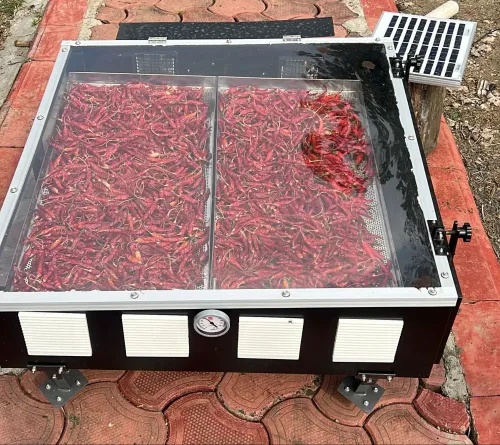
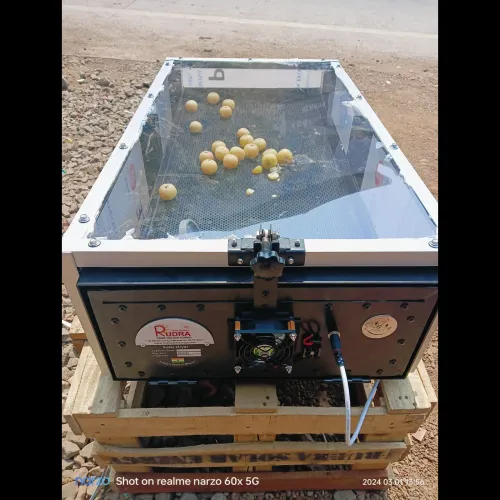
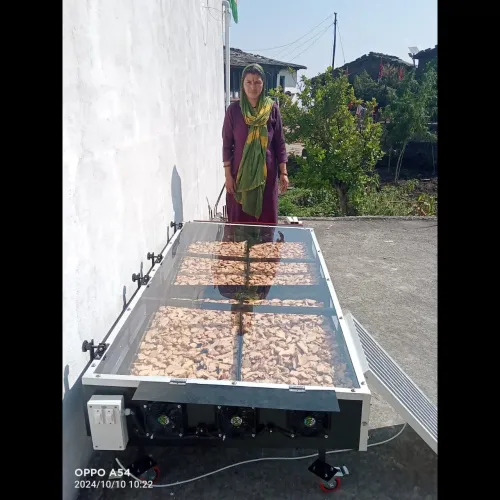
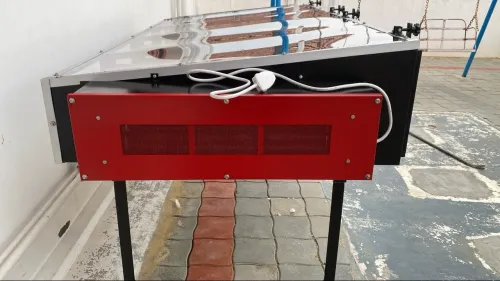
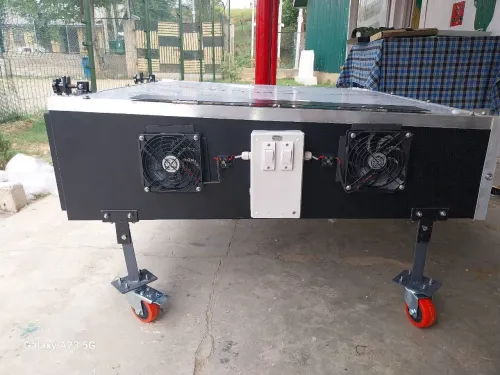
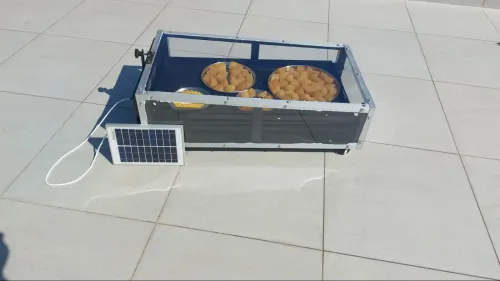
An enclosed solar dryer provides a defined chamber where agricultural material can be arranged on trays and dried using solar-assisted heat with organised airflow. The correct dryer, however, should be selected according to the commodity, incoming moisture, batch quantity, loading depth, airflow requirement and required final moisture, rather than machine capacity alone.
What can be dried in a solar dryer in Etawah?
A solar dryer can be evaluated for suitable agricultural materials such as mustard and selected oilseeds, pulses including urd and moong, maize, bajra and other compatible farm produce where additional moisture reduction is required. These crops have direct relevance to Etawah and its wider agro-climatic zone.
Each commodity should be processed according to its own moisture condition and intended end use. Mustard seed, maize and pulses should not automatically use the same loading depth or operating procedure.
Can a solar dryer be used for mustard in Etawah?
Yes. Where harvested mustard requires additional moisture reduction before appropriate storage or further processing, a solar dryer for mustard in Etawah can be considered.
Etawah’s official ODOP identification of Mustard makes this a particularly relevant local processing application.
The dryer performs the moisture-reduction stage only. Cleaning, grading, dehulling, oil extraction and packaging remain separate processing operations.
For mustard drying, important variables can include incoming seed moisture, batch depth, airflow, ambient humidity and the required storage or processing condition.
Which solar dryer capacity is suitable for farmers or FPOs in Etawah?
There is no single capacity that is suitable for every farmer or FPO.
The buyer should first determine:
Daily fresh material quantity
Commodity to be processed
Incoming moisture condition
Number of batches required per day
Usable tray or drying area
Processing season
Required final moisture
Solar-only or hybrid requirement
A small farmer processing occasional batches may require a very different system from an FPO collecting produce from multiple members.
Commercial capacity should therefore be selected according to normal daily throughput, not only peak-season availability.
What is the price of a solar dryer in Etawah?
The solar dryer price in Etawah depends on the technical configuration rather than location alone.
Cost can vary according to:
Batch capacity
Drying area
Number of trays
Chamber size
Construction material
Airflow system
Solar-only or hybrid configuration
Optional electric or biomass backup
Monitoring requirement
Installation and customisation
Current Indian solar-dryer listings themselves show substantial price differences between small domestic units and larger hybrid/commercial systems, illustrating why one universal solar-dryer price is not meaningful.
Buyers should therefore compare capacity, usable drying area and configuration along with price.
How long does a solar dryer take to dry agricultural produce?
There is no one drying time that is correct for every commodity.
Drying time can depend on:
Initial moisture
Required final moisture
Seed or product size
Loading depth
Airflow
Temperature
Relative humidity
Solar radiation
Dryer design
For example, mustard seed and maize can have very different moisture-transfer behaviour from a prepared vegetable product.
A reliable commercial drying plan should therefore use commodity-specific observations and moisture assessment rather than promising one fixed number of hours.
Can one solar dryer be used for mustard, pulses and maize?
A suitably configured multi-commodity solar dryer can potentially process different compatible agricultural materials in separate batches.
For Etawah, a processor may use the system for mustard during one season and suitable pulses, maize or other agricultural produce at another time.
However, when the commodity changes, the operator should reassess:
Loading depth
Batch quantity
Airflow
Temperature
Drying endpoint
Cleaning between batches
Multi-commodity capability does not mean one universal setting for every crop.
Is a hybrid solar dryer suitable for commercial processing in Etawah?
A solar-primary dryer can work where processing can follow available solar conditions.
For commercial processors requiring greater production flexibility, an optional hybrid solar dryer with suitable backup may be evaluated.
The requirement depends on factors such as:
Daily production target
Processing season
Weather conditions
Commodity
Required turnaround
Available backup energy
Hybrid support should be selected according to actual operational needs rather than assuming every buyer requires it.
How should an FPO select a commercial solar dryer in Etawah?
An FPO should evaluate the complete processing requirement before purchasing equipment.
Important questions include:
How much produce will members supply each day?
Which commodities will be dried?
What is the peak collection period?
How much usable drying area is available?
How many batches are required?
What happens to the product after drying?
What final moisture condition is required?
Will backup heating be necessary?
This approach helps avoid both undersized systems that become processing bottlenecks and oversized systems that remain underutilised.
How to choose a solar dryer manufacturer for Etawah?
A buyer looking for a solar dryer manufacturer or supplier for Etawah should evaluate more than price.
The manufacturer should be able to understand:
Commodity
Batch quantity
Moisture-removal requirement
Drying area
Airflow requirement
Material-contact surfaces
Solar or hybrid configuration
Installation requirement
Operation and support needs
Current commercial solar-dryer manufacturers also structure their offerings around different production scales—from smaller farmer units to larger commercial systems—showing why capacity matching is a core buyer concern.
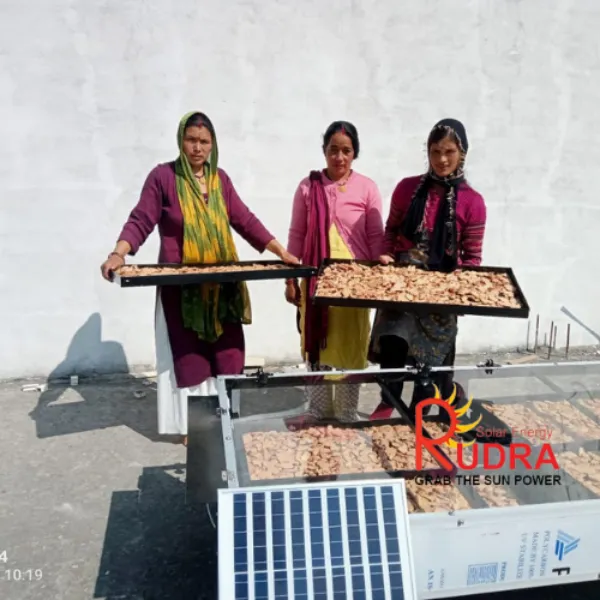
Rudra Solar Energy provides solar drying systems for agricultural and commercial processing applications. Buyers searching for a solar dryer in Etawah, commercial solar dryer in Etawah, solar dryer manufacturer in Etawah, solar dryer price in Etawah, mustard dryer, oilseed dryer, pulse dryer, maize dryer or hybrid solar dryer should begin with the exact commodity and daily processing requirement.
Keywords