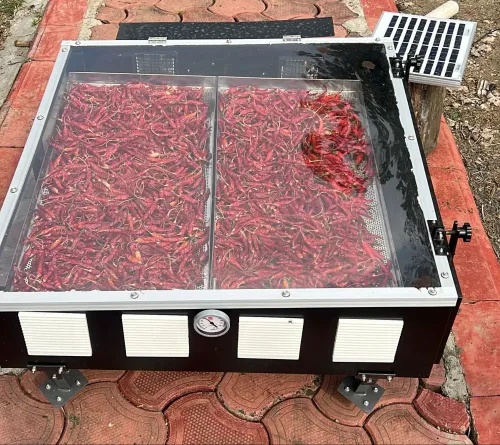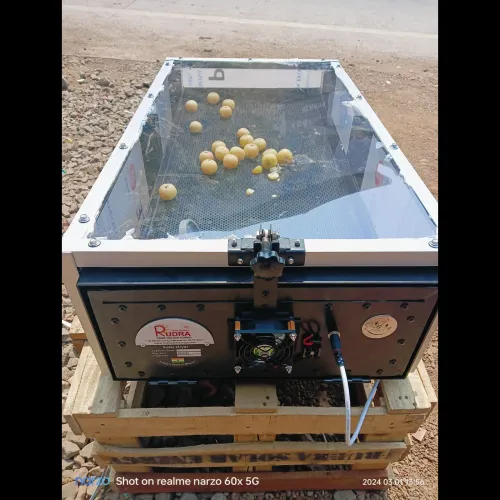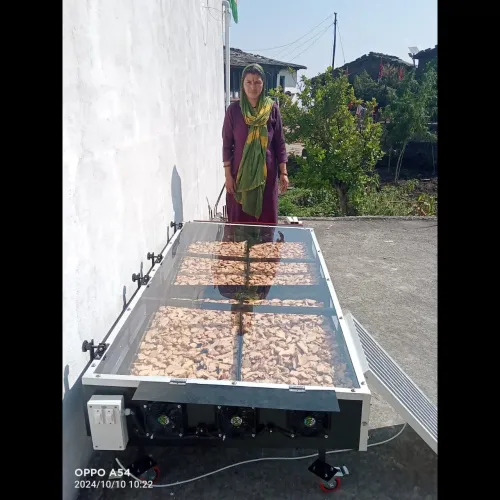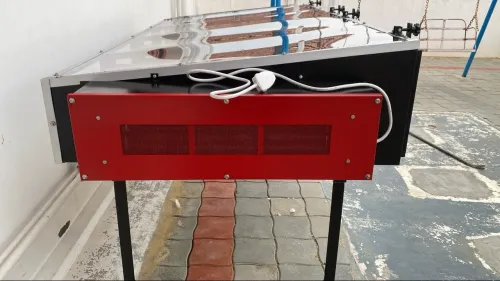
Chitrakoot sits in Uttar Pradesh’s Bundelkhand agro-climatic region, where agriculture is shaped by dry to dry-sub-humid conditions, variable rainfall and a large number of small and marginal farm holdings. Local cropping systems prominently include gram, lentil, pigeon pea, sesame, mustard, wheat, paddy, sorghum and bajra, giving the district a very different solar-drying opportunity from fruit-dominated regions of Uttar Pradesh.
For farmers, FPOs, cooperatives and rural processing enterprises searching for a commercial solar dryer in Chitrakoot, the strongest applications therefore lie in organised moisture management for suitable pulses, oilseeds, millets and other agricultural produce.
Pulses Are a Core Chitrakoot Processing Opportunity
Chitrakoot’s district crop profile records substantial cultivation of gram, lentil and pigeon pea, making pulses an important local agricultural category.
Where harvested pulses require additional moisture reduction before safe storage or further processing, an enclosed solar dryer for pulses can be evaluated according to the incoming crop condition.
Pulse drying should consider:
Initial Moisture
Crop Variety
Batch Quantity
Seed or Grain Size
Layer Depth
Airflow
Required Final Moisture
Storage Requirement
The objective is not maximum heating. The objective is to reach an appropriate moisture condition for the intended next stage.
Solar Drying for Gram and Lentil
Gram and lentil create different loading behaviour from fruits or sliced vegetables.
They are relatively dense agricultural materials and are commonly handled in larger batch volumes.
For this reason, practical dryer selection should consider:
Usable Drying Area
Product Depth
Air Distribution
Daily Throughput
Number of Required Batches
Target Moisture
A chamber that can physically hold a large quantity should not automatically be filled to the deepest possible level.
Air needs a suitable path through or across the loaded crop so moisture can continue moving away from the material.
Sesame and Mustard: Oilseed Moisture Management
Chitrakoot’s crop profile also includes sesame and mustard, creating a separate oilseed-processing application.
A solar dryer for oilseeds can be considered where harvested material requires moisture reduction before storage, cleaning, grading or further processing.
For sesame and mustard, processors should define:
Incoming Moisture
Cleaned or Uncleaned Material
Batch Quantity
Seed Depth
Airflow Requirement
Required Storage Condition
Further Processing Plan
Drying itself does not perform oil extraction, grading or packaging. Those remain separate downstream operations.
Millets Fit Chitrakoot’s Dryland Agricultural Context
Chitrakoot also grows sorghum and bajra, while Uttar Pradesh’s millet-development initiatives have included the district for crops such as jowar, bajra, kodo and sanwa.
This makes a solar grain dryer in Chitrakoot relevant beyond conventional wheat and paddy.
Millet drying should be managed according to:
Harvest Moisture
Grain Size
Cleaning Condition
Batch Depth
Air Movement
Ambient Humidity
Storage Requirement
Different grains should not automatically use the same drying temperature or duration.
Why Chitrakoot Needs a Different Dryer-Selection Approach
Chitrakoot’s KVK profile describes the district as having a high share of small and marginal farmers and also identifies limited access to value-addition techniques as a local challenge.
This means dryer selection should focus on practical utilisation, not simply maximum machine size.
A farmer group processing seasonal gram may need a different system from an FPO handling gram, sesame and millets across different months.
Before selecting equipment, buyers should define:
Crop: Pulse, oilseed, millet or another material
Daily Quantity: Fresh or harvested quantity requiring drying
Initial Moisture: Condition before loading
Target Moisture: Requirement for storage or processing
Operating Season: When the dryer will be used
Batch Frequency: Occasional or regular commercial use
Backup Need: Whether solar-primary operation is sufficient
Commercial Solar Dryer for FPOs and Rural Enterprises
A solar dryer in Chitrakoot can be evaluated for:
Pulse Growers
Oilseed Farmers
Millet Producers
FPOs and FPCs
SHGs
Agricultural Cooperatives
Rural Entrepreneurs
Agri-Processing MSMEs
Common Processing Centres
Farmer Collectives
The same system may potentially support multiple compatible commodities in separate batches, but every crop should have its own loading and drying approach.
Rudra Solar Energy for Chitrakoot Agricultural Processing
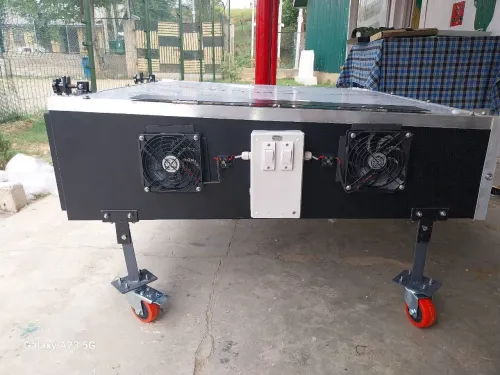
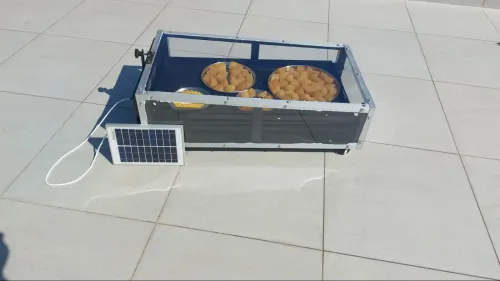
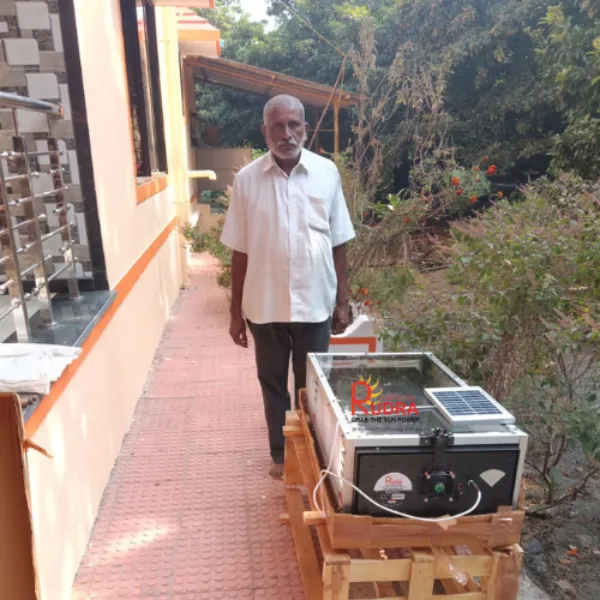
Rudra Solar Energy designs and manufactures commercial solar dryer systems for agricultural and post-harvest processing requirements.
For buyers searching for a commercial solar dryer in Chitrakoot, solar dryer machine in Chitrakoot, solar dryer for pulses, gram dryer, lentil dryer, solar dryer for oilseeds, sesame dryer, mustard dryer, millet dryer, agricultural solar dryer or hybrid solar dryer, system selection can be based on crop type, incoming moisture, batch quantity, usable drying area and production schedule.
Share your commodity, quantity, moisture condition and processing requirement with Rudra Solar Energy to evaluate a suitable solar drying configuration.
Keywords