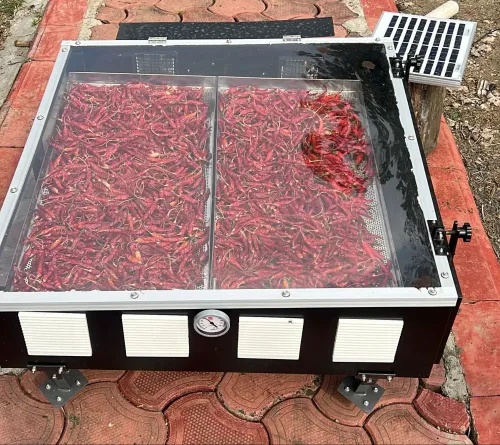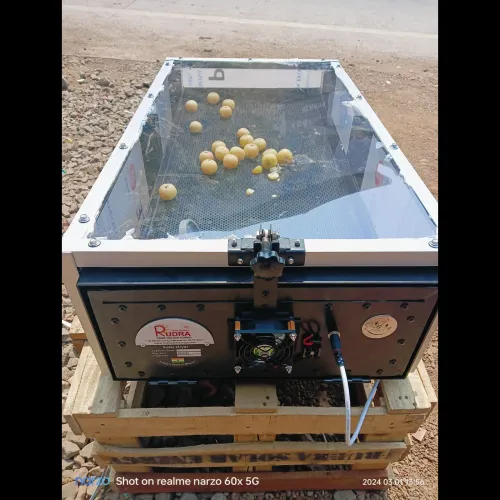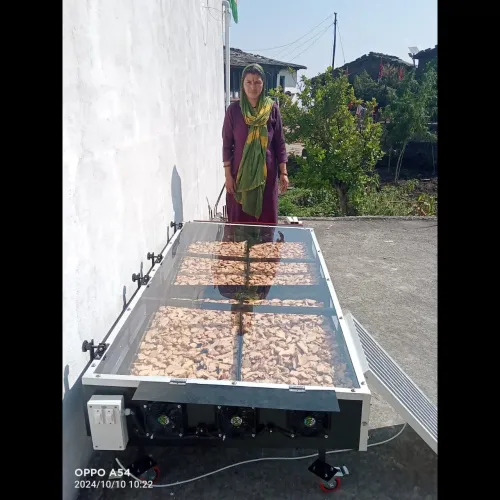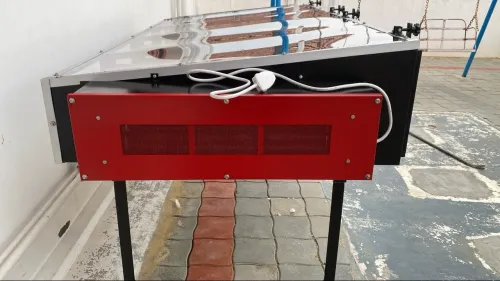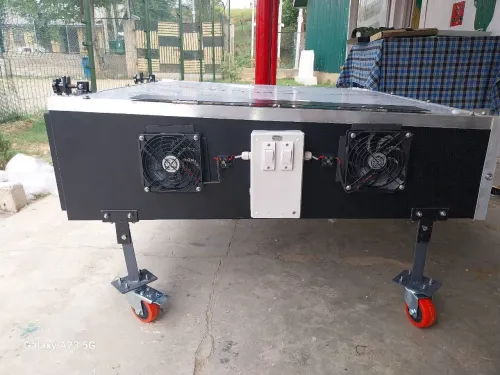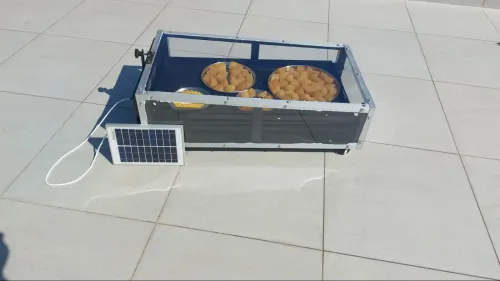
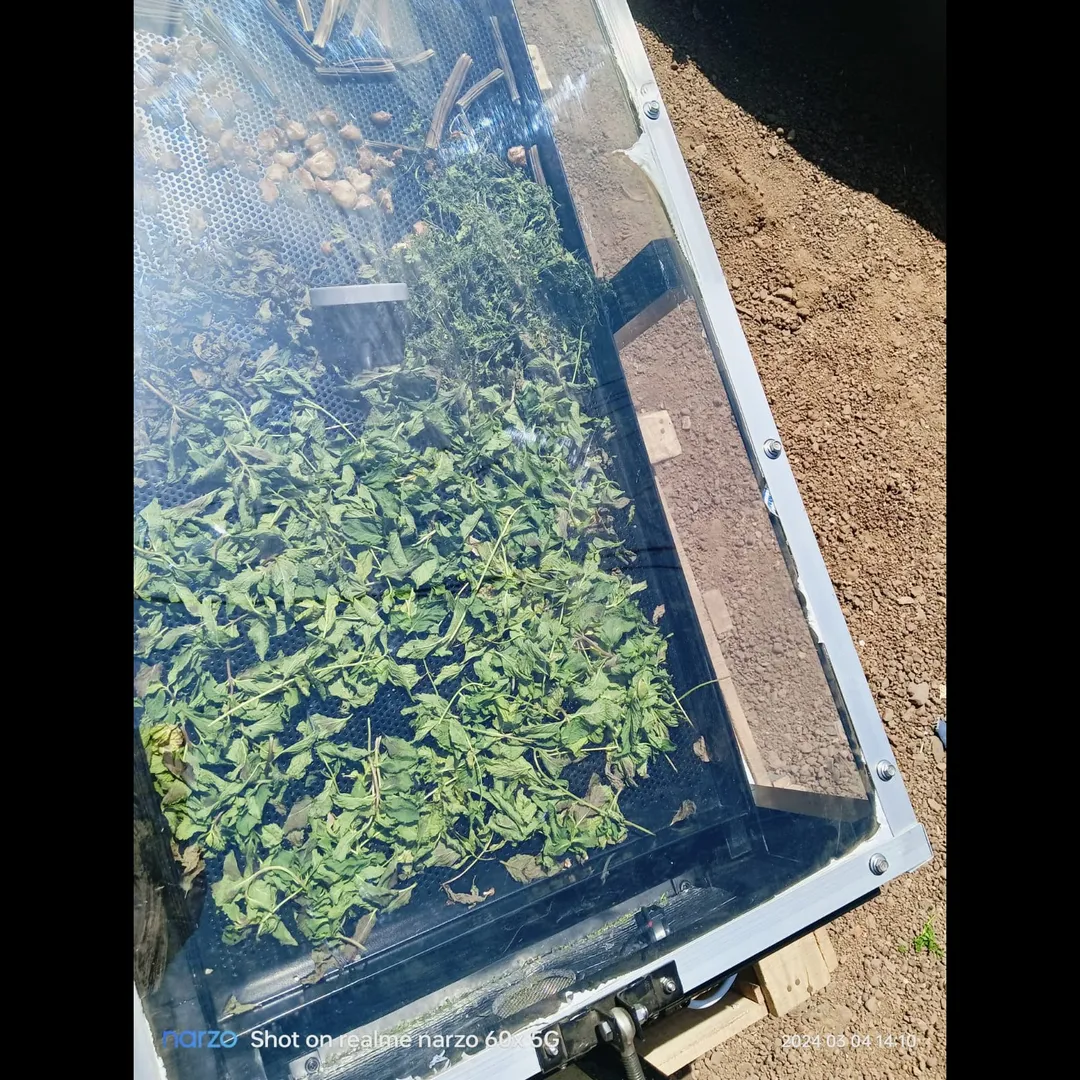
Mirzapur has a diverse agricultural landscape across areas such as Chunar, Marihan, Lalganj and Sadar, where farmers and rural enterprises handle grains, pulses, oilseeds and other farm produce under varying seasonal and moisture conditions. Cropping systems documented for the district include rice, wheat, chickpea, lentil, mustard, pearl millet, pigeonpea and sesame, creating scope for better post-harvest moisture management and agricultural value addition. A Rudra Solar Dryer provides an enclosed drying environment that uses solar thermal energy and managed airflow to reduce moisture from suitable agricultural produce while limiting direct exposure to dust, insects, birds and uncontrolled outdoor conditions. Drying performance is not fixed and depends on the commodity, initial and target moisture, loading, airflow, humidity, solar radiation and local weather.
1. Why is a solar dryer useful for farmers and agro-processors in Mirzapur?
Mirzapur’s agricultural system includes cereals, pulses, oilseeds and other crops that may require moisture reduction before storage, milling, seed use or further processing.
Post-harvest drying becomes particularly important when produce is harvested with moisture above the level suitable for its intended storage or processing requirement.
Traditional open-sun drying can expose produce directly to:
- Dust and soil
- Insects and birds
- Wind-blown particles
- Sudden changes in weather
- Uncontrolled loading surfaces
An enclosed solar dryer creates a protected drying chamber in which solar heat and airflow work together to remove moisture.
Depending on dryer configuration, solar-powered DC fans can assist air circulation so that moisture released from the product is carried away more effectively.
For Mirzapur, solar drying can support farmers, FPOs, SHGs, seed handlers, grain processors, pulse processors, oilseed handlers and other agro-processing enterprises seeking more organized post-harvest drying.
2. Which crops and agricultural products can be solar dried in Mirzapur?
Suitable solar drying applications in Mirzapur can include different crop groups according to the required final use.
Grains and cereals
Rice, wheat, barley, pearl millet and other suitable grains may require moisture reduction before storage, milling or further processing.
Pulses
Chickpea, lentil, pigeonpea, greengram and blackgram can have different moisture and storage requirements depending on harvest condition and processing objective.
Oilseeds
Mustard and sesame are examples of oilseed materials where appropriate moisture management may be important before storage, seed use or processing.
Vegetables, herbs and spices
Where suitable produce is handled locally, vegetables, herbs, chilli, turmeric, ginger and similar commodities may also be considered for solar drying and value-added processing.
A single drying method should not be applied identically to all these products.
Rice grain, sesame seed, lentil and leafy material differ substantially in size, surface area, density and temperature sensitivity.
3. Why can solar drying be important for pulses and oilseeds in Mirzapur?
Pulses and oilseeds require suitable moisture conditions for storage and further processing.
If moisture remains too high for the intended storage condition, quality deterioration can become a concern. At the same time, excessive or poorly controlled drying may also affect product characteristics or seed viability where material is intended for sowing.
An enclosed solar dryer allows users to manage:
- Layer depth
- Product loading
- Air movement
- Drying exposure
- Batch separation
- Product handling
For oilseeds such as mustard or sesame, drying requirements can differ because seed size, oil content, initial moisture and intended use vary.
Pulses such as lentil, chickpea, pigeonpea, greengram and blackgram also have different physical and storage characteristics.
Therefore, the final moisture target should be decided according to the particular commodity and its intended storage, processing or seed requirement rather than using one universal target for every crop.
4. Is a solar dryer better than open-sun drying for agricultural produce in Mirzapur?
The main difference is the level of process protection and control.
Open-sun drying normally exposes produce directly to the surrounding outdoor environment. The product may be spread on tarpaulins, roofs, yards or other open surfaces, where contamination and unpredictable weather can be difficult to manage.
An enclosed solar dryer keeps the material inside a defined drying chamber.
Potential operational advantages include:
- Reduced direct exposure to dust
- Protection from insects and birds
- Better organized batch handling
- Controlled tray or chamber loading
- Managed airflow
- Reduced dependence on exposed drying surfaces
- Easier monitoring of individual batches
However, solar-only drying still depends on solar radiation and ambient weather.
An enclosed solar dryer should therefore be described as a more controlled and protected drying method rather than as a completely weather-independent system.
5. How do Mirzapur’s seasonal and weather conditions affect solar drying?
Mirzapur includes different terrain and farming situations, including areas where rainfall availability and seasonal weather can influence agricultural operations.
Solar drying performance is also directly influenced by environmental conditions.
Important factors include:
Solar radiation
The useful thermal energy available to the dryer changes with sunlight intensity and cloud cover.
Relative humidity
More humid air has a lower capacity to absorb additional moisture from the product, which can slow moisture removal.
Ambient temperature
Seasonal temperature changes affect drying conditions inside the system.
Airflow
Moisture that evaporates from the product must be carried away. Inadequate airflow can slow drying even when sufficient heat is available.
Product loading
Deep layers or overloading can restrict air movement and create uneven drying conditions.
Users planning year-round commercial production should therefore evaluate whether a solar-only configuration meets their requirement or whether a suitable hybrid backup is needed for periods of low solar availability.
6. How long does it take to dry grains, pulses or oilseeds in a solar dryer?
There is no one fixed drying time for Mirzapur or for any single category of agricultural produce.
Drying duration depends on:
- Commodity type
- Initial moisture
- Target moisture
- Seed or grain size
- Whole or processed condition
- Layer depth
- Loading density
- Tray configuration
- Airflow
- Drying temperature
- Relative humidity
- Solar radiation
- Weather conditions
For example, sesame has a very different size and loading behaviour from wheat. Lentil behaves differently from paddy, and leafy herbs behave differently from all of them.
This is why technically responsible solar drying should focus on reaching the appropriate product or moisture condition rather than advertising one standard number of drying hours for every commodity.
7. How should farmers, FPOs or processors choose solar dryer capacity in Mirzapur?
Dryer selection should begin with the actual processing requirement.
Before selecting capacity, the user should identify:
- Commodity to be dried
- Quantity of fresh material per batch
- Initial moisture condition
- Required final moisture or product condition
- Number of batches required
- Layer depth or tray-area requirement
- Seasonal or year-round utilisation
- Available installation space
- Solar exposure at the site
- Need for solar-only or hybrid operation
Kilogram capacity alone can sometimes be misleading.
A dense grain can occupy less drying area per kilogram than a bulky leafy or sliced commodity. Even within grains and seeds, bulk density and acceptable layer depth may vary.
Therefore, system selection should account for both the weight of the material and the drying area or airflow required by that commodity.
8. Why consider a Rudra Solar Dryer in Mirzapur?
A Rudra Solar Dryer can be considered by farmers, FPOs, SHGs, rural entrepreneurs and agro-processing businesses in Mirzapur seeking an enclosed solar drying solution for suitable grains, pulses, oilseeds, vegetables, herbs, spices and other agricultural produce.
Rudra Solar Energy develops solar drying systems in different capacities and configurations, with system selection based on the actual commodity and processing requirement.
Depending on model and application, important considerations can include:
- Enclosed drying chamber
- Managed airflow
- Solar-powered DC fans where applicable
- Organized tray or chamber loading
- Different capacity configurations
- Commodity-specific loading requirements
- Solar-only or hybrid configuration where required
For users searching for a solar dryer in Mirzapur, solar drying machine in Mirzapur, commercial solar dryer in Mirzapur, solar dryer for grains, solar dryer for pulses, solar dryer for mustard and sesame or a post-harvest drying solution in eastern Uttar Pradesh, the system should be selected according to the commodity, batch size, initial and final moisture requirements, airflow, loading pattern and expected operating conditions.
Solar drying can become one stage of a broader value-addition process involving proper cleaning, drying, handling, storage, packaging and marketing of agricultural products. The strongest results therefore come from matching the drying system to the actual crop and final product requirement rather than using a one-size-fits-all approach.
Keywords