Best Solar Dryer in Mahoba for Groundnut, Oilseeds, Pulses & Farm Produce
Choosing the best solar dryer in Mahoba should begin with the crop and processing requirement rather than simply comparing machine size or price.
Mahoba lies in the Bundelkhand region of Uttar Pradesh and has an agricultural context that is different from high-humidity eastern districts or fruit-dominated regions. Groundnut and linseed are particularly relevant oilseed crops for Mahoba, while pulses, seeds, medicinal plants and other suitable farm produce can also create opportunities for post-harvest moisture management and value addition.
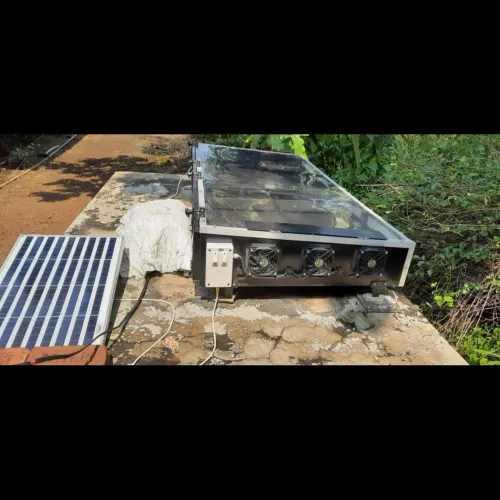
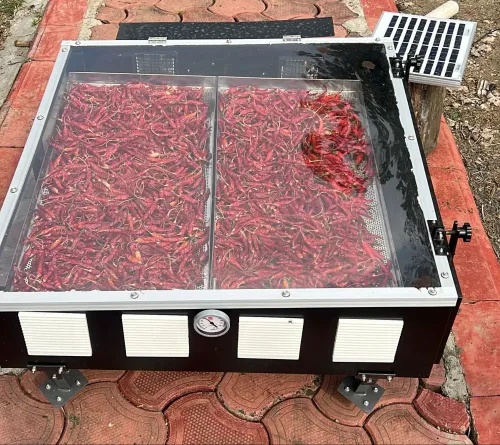
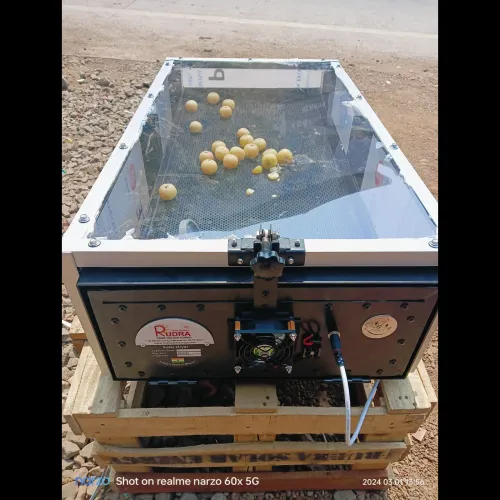
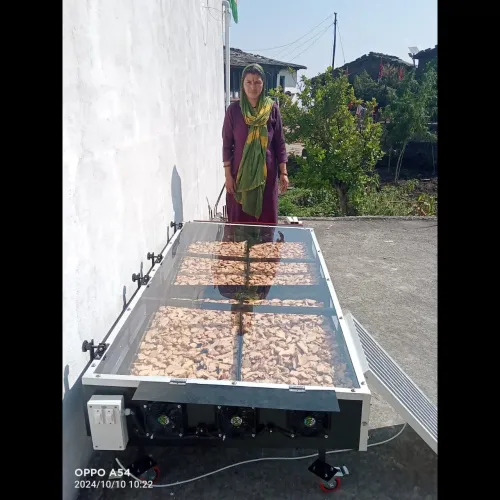
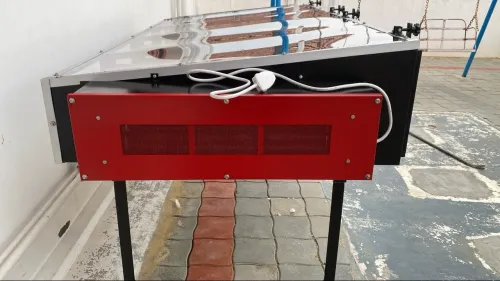
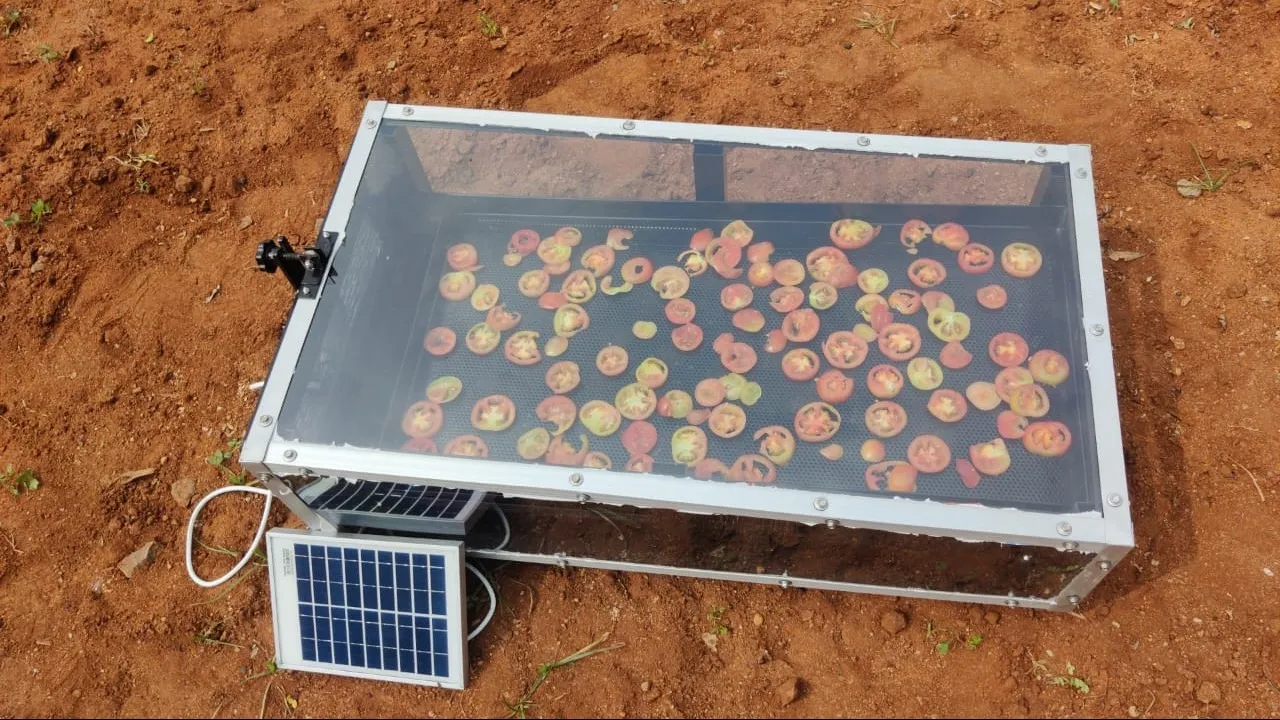
For farmers, FPOs, SHGs and food-processing businesses, a properly selected Rudra Solar Dryer can provide an enclosed, tray-based environment for reducing moisture while offering better protection from dust and insects than direct open-sun exposure.
Why Solar Drying Is Relevant in Mahoba
Drying is not the same process for every agricultural commodity.
A groundnut pod has different drying behaviour from a sliced vegetable. Linseed and other seeds require different loading and moisture-management practices from herbs or medicinal plants.
The most suitable solar drying system should therefore be selected according to:
- Commodity
- Initial moisture
- Fresh-input quantity
- Required final moisture
- Product size
- Loading depth
- Tray area
- Airflow requirement
- Processing season
- Intended final use
The objective should be controlled moisture reduction rather than simply exposing the product to maximum heat.
Best Solar Dryer for Groundnut Processing in Mahoba
Groundnut is an important Mahoba-specific application to consider when evaluating agricultural drying.
After harvesting, appropriate moisture reduction becomes important before groundnuts are stored or taken for further processing. Excessive residual moisture during storage can create quality-management problems, while inappropriate high-temperature drying can also affect the product.
Groundnuts therefore need a drying process suited to their physical form and intended end use.
Important factors include:
- Condition of harvested groundnuts
- Whether material is being handled in pods or another processed form
- Initial moisture
- Loading depth
- Air circulation
- Required final moisture
- Storage method after drying
A solar dryer for groundnut should not automatically be operated using the same procedure as a fruit or vegetable dryer.
The best system is one that provides sufficient loading area and airflow for the quantity being handled without creating an excessively deep or crowded layer.
Solar Drying for Linseed and Other Oilseeds
Linseed is another crop specifically relevant to Mahoba.
Oilseeds require careful moisture management because the objective is to reach an appropriate condition for subsequent handling or storage without treating excessive heat as a shortcut for faster drying.
For linseed or another technically suitable oilseed, processors should consider:
- Initial seed moisture
- Layer depth
- Batch quantity
- Airflow distribution
- Drying temperature
- Required final condition
- Intended storage or processing use
Seeds should be loaded in a way that allows moisture released from the crop to be carried away effectively.
The drying settings appropriate for groundnut may not be appropriate for linseed even though both can fall within the broader oilseed category.
Best Solar Dryer for Pulses and Seeds
Mahoba and the wider Bundelkhand agricultural system also create opportunities for post-harvest handling of pulses and seeds.
For these commodities, solar drying may be useful when additional controlled moisture reduction is technically required before storage or processing.
Important considerations include:
Initial Moisture
The starting moisture condition determines how much moisture needs to be removed.
Loading Depth
Small grains or seeds can easily form a dense layer. Excessive loading depth can restrict air movement and lead to uneven drying.
Airflow
Air needs to move effectively around or through the loaded material to carry released moisture away.
Intended Use
Material intended for consumption and seed intended for planting may have different quality requirements. Drying procedures should therefore be selected according to the end use.
Medicinal and Aromatic Plant Processing
Mahoba has also been associated with cultivation of medicinal and aromatic crops.
These products create a different solar-drying opportunity from oilseeds.
Leaves, stems, roots or other plant parts may require relatively careful temperature and airflow management depending on the crop and desired final product.
Aromatic material should not automatically be subjected to excessive temperature simply to shorten drying time.
For suitable medicinal and aromatic produce, processors should consider:
- Plant part being dried
- Harvest stage
- Cleaning and preparation
- Layer thickness
- Airflow
- Temperature sensitivity
- Required final moisture
- Packaging after drying
This makes an application-specific drying procedure essential.
What About Mahoba Paan?
Mahoba is well known for its traditional betel-leaf or paan cultivation.
However, the fact that a crop is locally famous does not automatically mean that it should be promoted as a major solar-drying application.
Fresh betel leaves are commonly valued and marketed in fresh form, and their handling requirements are different from those of oilseeds, pulses or dehydrated vegetables.
A solar dryer should therefore be recommended for betel leaf only when there is a clearly defined dried-product application and a validated processing requirement.
This commodity-first approach is more technically responsible than claiming that every locally grown crop should be solar dried.
Solar Drying of Vegetables and Other Farm Produce
Where locally available and technically suitable, a multipurpose solar dryer can also be evaluated for prepared products such as:
- Chilli
- Tomato
- Onion
- Garlic
- Selected vegetables
- Herbs
- Medicinal plants
- Groundnut
- Oilseeds
- Pulses
- Seeds
Each commodity requires its own preparation and drying procedure.
For example, vegetables may need washing and slicing, herbs need relatively light tray loading, while seeds and oilseeds require consideration of layer depth and airflow.
Multipurpose capability does not mean using the same temperature, loading arrangement or drying duration for every product.
Why Airflow Matters in an Agricultural Solar Dryer
Many buyers focus primarily on temperature when comparing solar dryers.
Temperature is important, but airflow is equally important.
As moisture moves from the product into the surrounding air, that moisture needs to be removed from the drying chamber. Poor airflow can slow the process and contribute to differences between different parts of the batch.
A suitable drying system should therefore combine:
- Solar heat gain
- Appropriate air movement
- Moisture exhaust
- Suitable tray or loading arrangement
- Commodity-specific operating practices
Simply producing a high chamber temperature does not automatically create better drying.
Best Solar Dryer for Farmers in Mahoba
For an individual farmer, the best solar dryer should match actual processing volume.
Before selecting capacity, determine:
- Which crop will be processed?
- How much material is available per batch?
- During which months will processing occur?
- How many batches are expected?
- How much preparation is required before loading?
- What final product or storage condition is required?
An oversized system may remain underutilized, while an undersized dryer may create a bottleneck during the harvest period.
Capacity should therefore be based on realistic processing requirements.
Best Solar Dryer for FPOs and SHGs in Mahoba
FPOs can aggregate crops from several farmers and therefore may require higher batch capacity than individual growers.
SHGs or rural entrepreneurs may instead begin with smaller value-added product batches.
Before choosing a dryer, an FPO or SHG should evaluate:
- Daily fresh-input quantity
- Number of participating producers
- Main commodities
- Seasonal crop availability
- Required tray/loading area
- Processing labour
- Installation space
- Electricity availability
- Packaging and storage facilities
- Potential requirement for hybrid operation
The system should fit the complete enterprise rather than being selected only according to its stated kilogram capacity.
Tray Area and Loading Method Matter
For tray-based commodities, usable surface area can be as important as total machine capacity.
For grains, pulses, oilseeds or seeds, the thickness of the loaded layer must also be considered.
Overloading can restrict airflow and create non-uniform moisture reduction.
Processors should therefore evaluate:
- Number of trays
- Tray dimensions
- Total usable area
- Product layer depth
- Airflow path
- Batch weight
- Product density
This gives a more realistic picture of whether a dryer is suitable for the planned commodity.
Solar Dryer vs Open-Sun Drying
Traditional open-sun drying places agricultural produce directly in the surrounding outdoor environment.
An enclosed solar dryer provides a dedicated chamber where product can be arranged in a more organised manner while solar-heated air supports moisture removal.
Compared with direct open-sun exposure, an enclosed system can offer better physical protection from:
- Dust
- Insects
- Birds
- Direct outdoor handling
- Other environmental exposure
However, the dryer alone does not guarantee product safety, shelf life or final quality.
Raw-material quality, hygiene, moisture control, cooling, packaging and storage remain important.
There Is No Universal Drying Time
There is no technically correct single drying time for groundnut, linseed, pulses, herbs, vegetables and medicinal plants.
Drying performance depends on:
- Commodity
- Initial moisture
- Required final moisture
- Product size
- Preparation
- Quantity loaded
- Layer thickness
- Tray arrangement
- Airflow
- Drying temperature
- Ambient temperature
- Humidity
- Solar radiation
- Season
- Dryer configuration
For this reason, claims such as “every crop dries in a fixed number of hours” should not be used for selecting a solar dryer.
The endpoint should be determined according to the actual product requirement.
How to Choose the Best Solar Dryer in Mahoba
Before buying a solar dryer, define the application clearly.
Ask:
- What is the main crop?
- How much fresh material must be processed?
- What is its initial condition?
- Will the crop be sliced, shelled or otherwise prepared?
- How much loading or tray area is required?
- What airflow is needed?
- What final moisture condition is required?
- During which season will the system operate?
- Is solar-only operation sufficient?
- Is an appropriate hybrid configuration required?
Rudra Solar Energy offers solar drying systems in different capacities and configurations for agricultural and food-processing applications.
The suitable Rudra Solar Dryer should be selected by matching the commodity, capacity, tray/loading area, airflow and production requirement.
Building Agricultural Value Addition in Mahoba
Mahoba’s position in Bundelkhand and its relevance for crops such as groundnut and linseed create a distinct agricultural processing opportunity.
Solar drying can support farmers and processors where controlled moisture reduction is required for suitable oilseeds, pulses, seeds, vegetables, herbs or medicinal produce.
For anyone searching for the best solar dryer in Mahoba, the correct decision should begin with the crop rather than the machine.
By matching the dryer capacity, loading area, airflow and operating method with the actual commodity and processing objective, farmers, FPOs, SHGs and food businesses can develop a more structured approach to solar drying and agricultural value addition in Mahoba.
Keywords