Best Solar Dryer in Maharajganj for Potato, Grains, Vegetables & Farm Produce
Choosing the best solar dryer in Maharajganj requires more than comparing machine capacity or price. Maharajganj is an agriculture-intensive district where food grains, sugarcane, oilseeds and potato form an important part of local agricultural production. Its location near the Himalayan foothills also brings relatively high rainfall and strong monsoon influence, making weather conditions an important consideration when planning a solar drying operation.
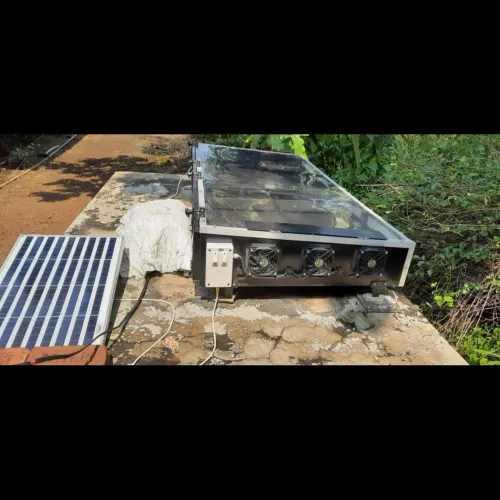
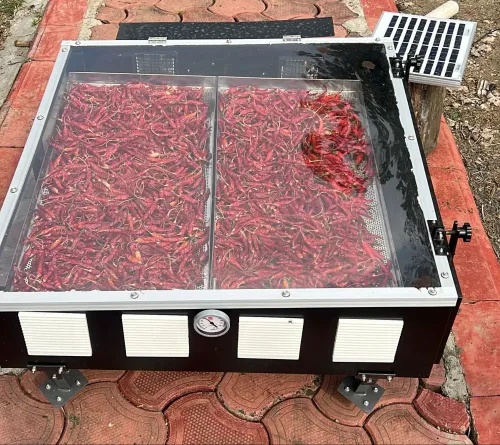
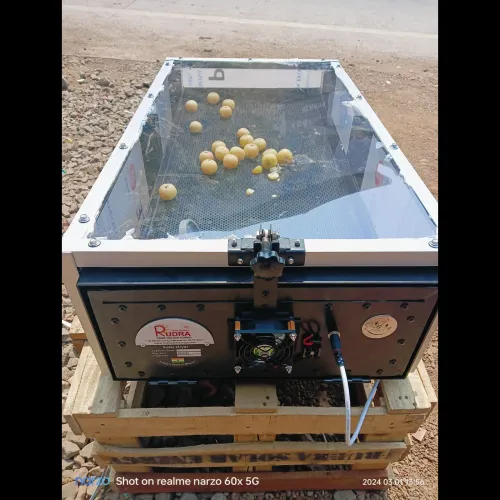
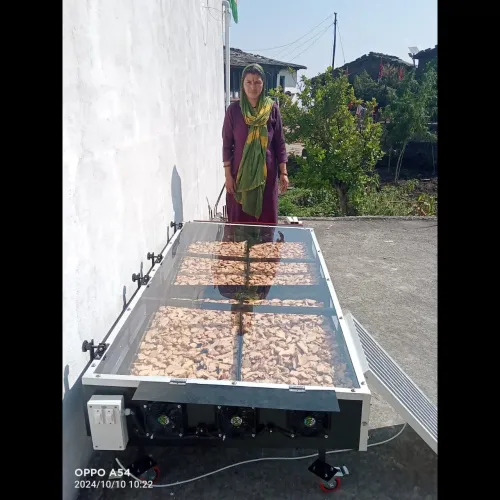
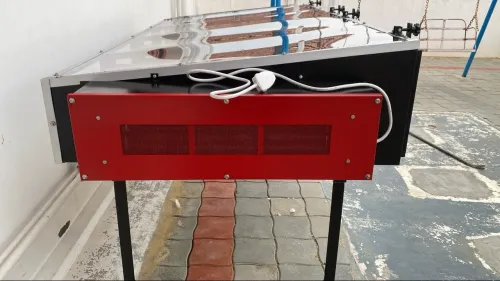
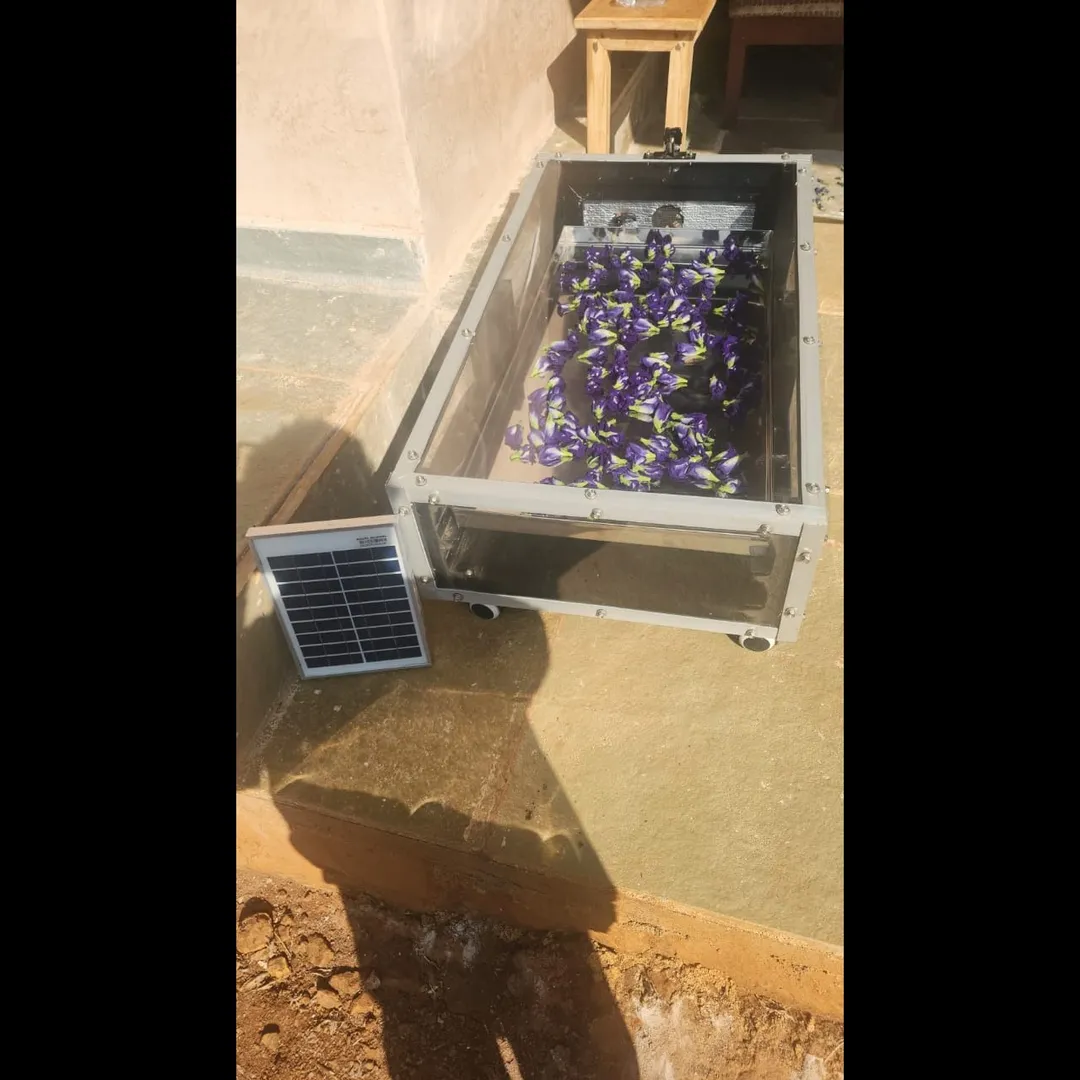
For farmers, FPOs, SHGs, food processors and rural enterprises, an appropriately selected Rudra Solar Dryer can support moisture reduction and value addition for suitable agricultural products in an enclosed, tray-based drying environment.
Why Solar Drying Is Relevant in Maharajganj
Agricultural products do not all require the same drying process.
Potato slices contain very different amounts of moisture from grains or oilseeds. A leafy product behaves differently from a dense vegetable. Even two batches of the same crop can require different drying conditions depending on maturity, initial moisture, preparation and weather.
This is why the best solar dryer for Maharajganj should be selected according to the actual commodity and processing requirement rather than using one standard specification for every farm or enterprise.
An enclosed solar drying system can help:
- Reduce moisture from suitable agricultural produce
- Provide better protection from dust and insects than direct open-sun exposure
- Organise products on trays for controlled loading
- Support value-added food processing
- Reduce dependence on spreading produce directly in open areas
- Allow processors to develop repeatable preparation and drying procedures
Actual drying performance will still depend on solar radiation, ambient humidity, airflow, loading and the physical characteristics of the product.
Best Solar Dryer for Potato Processing in Maharajganj
Potato is specifically recorded among Maharajganj district’s agricultural products, making it one of the strongest district-specific applications to consider for value-added processing.
Suitable potatoes can be processed into dried forms for different food applications after appropriate preparation.
A potato drying process may involve:
- Sorting and selecting suitable potatoes
- Washing and removing soil thoroughly
- Peeling where required by the final product
- Cutting potatoes into reasonably uniform slices, strips or pieces
- Applying suitable pretreatment such as blanching where the product specification requires it
- Removing excess surface water before tray loading
- Loading prepared potato without excessive overlapping
- Maintaining appropriate airflow
- Monitoring moisture reduction
- Cooling and packaging the dried product appropriately
Preparation is particularly important for potato because variation in piece thickness can result in uneven moisture removal.
The best solar dryer for potato processing should therefore provide enough usable tray area for the prepared product rather than forcing a large quantity of slices onto a limited surface.
Why Tray Loading Matters
A solar dryer’s kilogram capacity alone does not tell a processor how effectively a particular product can be loaded.
Consider two examples:
A dense agricultural product may occupy relatively little tray surface for a given weight.
Thin potato or vegetable slices may require considerably more surface area because pieces should not be heavily piled over one another.
For this reason, buyers should evaluate:
- Usable tray dimensions
- Total available tray area
- Number of trays
- Product thickness
- Loading density
- Airflow between trays
- Fresh-input requirement per batch
Proper loading helps expose more of the product surface to moving air and supports more uniform moisture reduction.
Solar Drying of Grains and Seeds
Food grains represent a major part of Maharajganj’s agricultural production.
Grain drying is different from drying sliced fruits or vegetables. The product is smaller, bulk density is different, and safe storage depends on achieving an appropriate moisture condition for the specific grain and intended use.
For grain or seed applications, processors should consider:
- Initial moisture
- Layer depth
- Airflow through or around the product
- Required final moisture
- Intended storage duration
- Whether the material is intended as food grain or seed
- Batch quantity
- Post-drying storage conditions
The operating procedure used for potato slices should never automatically be applied to grains or seeds.
Oilseeds and Other Agricultural Produce
Oilseed production is also listed in Maharajganj’s district agricultural statistics.
Where solar drying is technically appropriate for a particular oilseed, moisture reduction should be managed according to the crop, initial moisture and intended subsequent use.
Overheating should not be treated as a shortcut for faster processing.
The objective of drying is controlled moisture reduction while maintaining conditions appropriate to the commodity.
For this reason, processors should establish product-specific operating procedures instead of applying one drying temperature to every crop.
Solar Drying for Vegetables and Other Suitable Produce
A multipurpose solar dryer can also be evaluated for suitable vegetables and other agricultural produce available to local processors.
Possible applications can include appropriately prepared:
- Potato
- Tomato
- Onion
- Garlic
- Chilli
- Selected vegetables
- Herbs
- Grains
- Seeds
- Suitable oilseeds
The suitability of each product should be evaluated individually.
Vegetables may require washing, peeling, slicing or pretreatment. Herbs generally need gentler loading and different temperature management. Grains require an entirely different approach to sliced vegetables.
A multipurpose dryer does not mean that every commodity should be processed using the same settings.
Maharajganj Weather Makes Dryer Selection Important
Maharajganj receives considerable monsoon influence, and official district information notes that rainfall is higher than in many other parts of Uttar Pradesh because of its location near the Himalayan foothills.
This matters for solar drying.
High ambient humidity can reduce the rate at which moisture moves from a product into the surrounding air. Cloud cover and reduced solar radiation can also affect solar-only drying performance.
Therefore, anyone searching for the best solar dryer in Maharajganj should consider:
- The months in which processing will occur
- Typical rainfall and humidity during the crop season
- Daily production targets
- Whether drying can pause during weak-sun periods
- Whether a suitable hybrid or backup arrangement is required
A solar-only system should not be described as weather-independent.
Processors needing consistent operation during prolonged cloudy or humid periods should discuss an appropriate configuration based on their production requirement.
Best Solar Dryer for Farmers in Maharajganj
For individual farmers, the best dryer is usually one that matches the actual amount of produce available for processing.
Important questions include:
- Which crop needs to be dried?
- How many kilograms of fresh material are available per batch?
- How many days will the dryer operate during the season?
- How much labour is available for washing, slicing and loading?
- What final product will be produced?
- How will it be packaged and stored?
A very large dryer is not automatically better if the farmer cannot regularly prepare enough product to use its available tray area.
Best Solar Dryer for FPOs and SHGs
FPOs and SHGs may require a different configuration because they can aggregate produce from multiple growers or process several commodities during different seasons.
Before choosing capacity, they should evaluate:
- Expected daily collection
- Number of commodities
- Seasonal production variation
- Tray area required
- Available processing space
- Labour requirement
- Electricity availability
- Solar-only or hybrid preference
- Packaging and storage facilities
An FPO processing larger agricultural volumes may require substantially different capacity from an SHG developing smaller batches of dried vegetables or other value-added products.
Best Solar Dryer for Food Processing Businesses
MSMEs and food-processing entrepreneurs should evaluate the dryer as one part of a complete production line.
A structured process may include:
Raw material receiving → sorting → washing → preparation → pretreatment → tray loading → drying → moisture assessment → cooling → packaging → storage
For commercial processing, repeatability between batches becomes particularly important.
This requires consistent preparation, loading and operating practices rather than simply purchasing a dryer and changing procedures with every batch.
Solar Dryer vs Open-Sun Drying
Open-sun drying exposes agricultural products directly to the surrounding environment.
An enclosed solar dryer provides a dedicated chamber where prepared products can be arranged on trays and exposed to heated airflow.
Compared with direct open-sun exposure, this can provide better physical protection from:
- Dust
- Insects
- Birds
- Direct handling disturbance
- Other outdoor exposure
However, an enclosed dryer does not automatically guarantee food safety, fixed shelf life or final product quality.
Raw-material quality, hygiene, final moisture, cooling, packaging and storage remain essential parts of the process.
There Is No Universal Drying Time
There is no single technically correct answer to questions such as:
“How many hours will potato take?”
“How quickly can grains be dried?”
“How long will vegetables take?”
Drying time varies according to:
- Commodity
- Variety
- Initial moisture
- Required final moisture
- Product dimensions
- Slice thickness
- Pretreatment
- Quantity loaded
- Tray loading
- Airflow
- Drying temperature
- Ambient humidity
- Solar radiation
- Weather
- Dryer configuration
For Maharajganj, humidity and monsoon conditions can make these variables especially important during certain periods of the year.
The drying endpoint should therefore be determined from the required product condition rather than assuming one fixed number of hours.
How to Choose the Best Solar Dryer in Maharajganj
Before selecting a system, identify:
- The main commodity
- Fresh-input quantity per batch or day
- Product dimensions after preparation
- Required tray area
- Loading method
- Target final product
- Processing season
- Expected local weather conditions
- Requirement for solar-only or hybrid operation
- Packaging and storage plan
Rudra Solar Energy offers solar drying systems in multiple capacities and configurations for agricultural and food-processing applications.
The appropriate Rudra Solar Dryer should be selected by matching capacity, tray area, airflow and operating configuration with the actual processing requirement.
Supporting Agricultural Value Addition in Maharajganj
Maharajganj’s strong agricultural base creates opportunities for processing beyond the sale of raw produce.
Potato can be explored for suitable dehydrated products, grains and seeds require appropriate post-harvest moisture management, and selected vegetables and agricultural produce can be processed into dried forms where technically suitable.
For farmers, FPOs, SHGs and processors searching for the best solar dryer in Maharajganj, the strongest buying decision starts with the crop rather than the machine.
Understanding the commodity, daily fresh-input quantity, tray-area requirement, weather conditions and intended dried product makes it possible to choose a solar drying system that fits the actual processing operation.
Keywords