
Commercial Tea Processing Enterprise
Tea Leaf Solar Dryer for Commercial Tea Processing | Project
- Customer:
- Commercial Tea Processing Enterprise
- Project Category:
- Tea Processing & Plantation Industry
- Customer Requirement:
- The client required a commercial solar dryer for tea leaves that could support regular tea-processing batches while providing an organised enclosed drying environment. The major requirement was processing consistency across changing batch quantities. The client wanted the dryer configuration to account for: Incoming processed tea-leaf quantity Leaf condition before drying Daily production volume Required drying area Loading thickness Air circulation Temperature Ambient humidity Number of batches per day Final processing requirement Production schedule The processor also required sufficient flexibility to handle suitable tea batches without assuming that every type of tea could use one identical operating condition. Rather than selecting the equipment only by nominal kilogram capacity, the system needed to support the actual tea-processing throughput of the facility.
- Project Result:
- The project added a dedicated Tea Leaf Solar Dryer to the client’s commercial processing line, giving the enterprise a defined equipment stage for moisture reduction from suitable processed tea material. The client could plan dryer utilisation through: Tea Type → Processing Stage → Incoming Dryer Load → Drying Area → Airflow → Operating Conditions → Required Endpoint → Next Processing Stage The system also gave the facility a clearer basis for capacity planning. Instead of defining performance only by how many kilograms could be loaded into the chamber, the processing team could consider the relationship between batch quantity, usable drying area, loading thickness, airflow and daily throughput. This created a more organised dryer stage for commercial tea processing while keeping other tea-manufacturing operations separate. For future expansion, dryer capacity could be evaluated against: Peak leaf-processing season Daily production target Number of dryer batches Available installation area Required operating window Need for optional backup This project demonstrates how a solar dryer for tea leaves can be integrated into a commercial tea-processing workflow without overstating the role of the equipment.
- What we did:
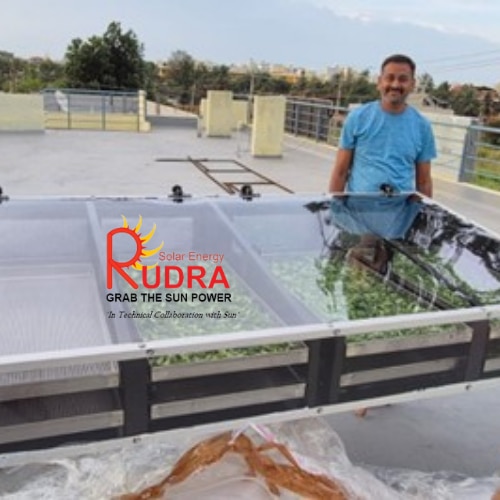
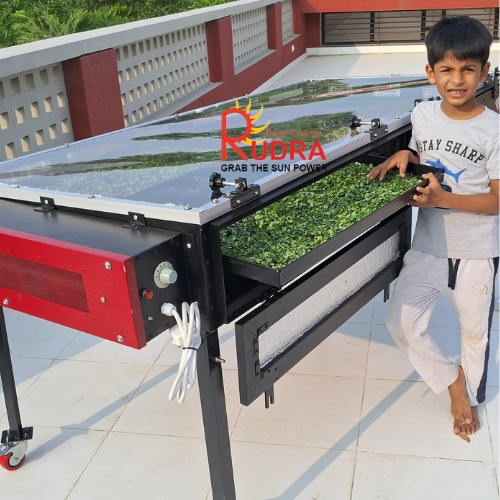
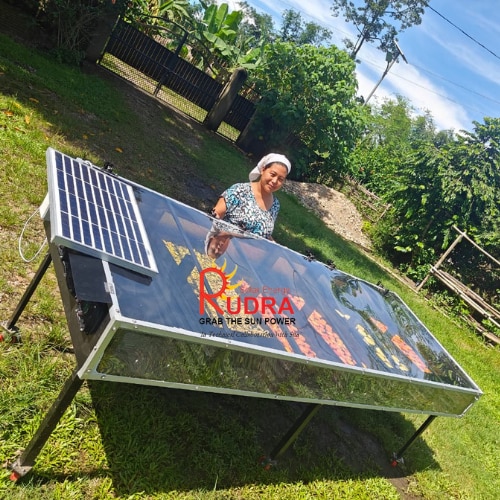
- Matched the Solar Dryer with the Existing Tea Line Rudra Solar Energy approached the installation as one component of a wider tea-processing operation. The dryer was integrated around a practical sequence such as: Tea Leaf Reception → Required Tea-Specific Processing → Prepared/Processed Leaf → Solar Dryer → Moisture Assessment → Cooling → Sorting / Grading → Further Processing or Packaging The exact upstream stages remained dependent on the tea being manufactured. This prevented the solar dryer from being incorrectly presented as a replacement for withering, rolling, oxidation, steaming or other tea-manufacturing equipment. Planned Capacity Around Tea Leaf Loading Tea leaves create a different loading requirement from dense grains, oilseeds or roots. A batch may occupy substantial drying area relative to its weight depending on the condition of the leaf entering the dryer. For this reason, the client’s practical dryer requirement was assessed through: Tea Quantity + Leaf Condition + Drying Area + Loading Thickness + Airflow + Required Throughput rather than: Capacity = kilograms alone This was important for commercial production because loading additional material into the same available area can change the thickness of the product layer and the way drying air interacts with the batch. Created an Organised Multi-Tray Drying Arrangement The Tea Leaf Solar Dryer used a structured loading arrangement suited to the selected system configuration. Tray or loading planning considered: Processed leaf quantity Distribution across the drying area Product-layer thickness Air exposure Batch separation Loading and unloading workflow Required batches per day For the processor, this provided a clearer method for planning production than simply filling the chamber to its maximum physical limit. A commercial tea dryer should ideally be sized around how much appropriately loaded material needs to move through the facility each day. Made Airflow Part of the Equipment Selection Tea leaf drying is not simply a matter of adding heat. Moisture released from the material enters the surrounding drying air. That moisture needs to be carried away for further moisture reduction to continue. The project therefore considered: Solar-assisted heating Air movement Loading distribution Moisture removal Temperature Ambient humidity Batch condition Depending on configuration, controlled or forced airflow supported organised movement of air through the drying chamber. This made airflow an equipment parameter rather than an afterthought. Kept Tea Type Separate from Machine Capacity A solar dryer for tea leaves may be used within different suitable tea-processing workflows, but that does not mean black tea, green tea or every specialty tea should automatically receive the same dryer settings. Tea Board India confirms that black and green tea differ in their manufacturing sequence. The project therefore avoided one universal temperature or drying duration. Operating decisions needed to consider: Type of tea Condition of material entering the dryer Previous processing stage Leaf size or processed form Batch load Airflow Temperature requirement Required final condition Tea-manufacturing specification The processor’s actual product specification remained the final basis for setting operating conditions. Supported Regular Commercial Tea Production This was not designed as an occasional household drying application. The client required a commercial solar dryer capable of fitting into regular tea processing. System planning therefore considered: Normal daily input Peak-season input Batches per day Working hours Loading and unloading time Drying area Operating schedule Availability of solar energy Optional backup requirement Downstream processing capacity This helped prevent a common equipment-selection problem: purchasing a dryer that can hold the required batch weight but does not match the daily production flow of the processing facility. Tea Leaf Dryer for Plantation Processing Tea estates, small tea growers, producer groups and commercial processors can operate at very different scales. For a plantation-processing business, the important equipment question is not merely: “What size solar dryer is available?” It is: “How much processed tea material must pass through the drying stage within the available production window?” That calculation can involve: Fresh leaf collection volume Material remaining after upstream processing Daily processing schedule Batch size Dryer cycle requirements Number of processing batches The project therefore linked dryer capacity with the client’s wider production line. Enclosed Solar Dryer for Tea Leaves The enclosed chamber provided a more organised environment for the drying stage compared with exposing material directly outdoors. Depending on the selected Rudra system configuration, relevant features can include: Enclosed drying chamber Structured product loading Food-contact surfaces Solar-assisted heating Controlled or forced airflow Temperature monitoring Optional backup arrangement The system was selected for moisture reduction from appropriate tea material entering the dryer stage. It did not automatically guarantee final tea grade, flavour, aroma, colour or market value. Those outcomes can depend on the tea cultivar, leaf quality, upstream manufacturing stages, dryer operation, grading, storage and other processing factors. Solar Dryer vs Conventional Tea Processing Equipment The project did not attempt to replace an entire conventional tea factory with one solar dryer. Instead, the equipment was positioned where controlled moisture reduction was required. This distinction matters because tea manufacturing may involve specialised operations before drying. For example, Tea Board India describes green tea production as involving withering followed by steaming or pan-frying, rolling and drying, whereas black tea includes additional aeration of the processed leaves. Therefore: Solar Dryer = Drying / Moisture-Reduction Equipment not: Solar Dryer = Complete Tea Manufacturing Plant This made the project technically clearer for a commercial tea buyer. Commercial Solar Dryer for Tea Processing Businesses The completed system was relevant to: Tea estates Tea plantations Small tea growers Tea producer groups Tea-processing enterprises Specialty tea businesses FPOs/FPCs involved in tea production Rural tea-processing units Tea-processing MSMEs Commercial agricultural processors Buyer requirements can vary significantly across these groups. A small producer handling limited specialty batches can require very different drying area and throughput from a commercial processor receiving regular quantities of tea leaves. Solar-Primary Operation with Optional Backup The dryer was configured around solar-primary operation. Where a commercial tea-processing schedule requires additional operating flexibility, an appropriate hybrid solar dryer or backup-assisted configuration may be evaluated. Relevant factors include: Daily tea quantity Harvest season Production schedule Installation location Expected solar conditions Required processing window Required batch continuity Optional backup should therefore be selected according to the production requirement rather than treated as mandatory for every tea installation. Solar Dryer for Agricultural Products — Tea as a Dedicated Application Tea is an agricultural commodity, so broader searches such as solar dryer for agricultural products, commercial solar dryer, solar dehydrator and solar drying machine can lead buyers toward this category. However, a tea-processing project requires more specific consideration than a generic agricultural dryer page. The equipment needs to account for: Tea-processing stage Leaf condition Drying area Product loading Airflow Batch scheduling Required moisture endpoint This is why the system was configured as a Tea Leaf Solar Dryer application, not simply a general-purpose agricultural dryer assigned to tea.
Project Description
When Tea Processing Reaches the Dryer, Control Matters Fresh tea leaves do not simply move from harvest directly into a dryer and emerge as finished tea. The processing route depends on the type of tea being produced. Tea Board India notes that green tea processing can include withering, steaming or pan-firing, rolling and drying, while black tea includes additional aeration/oxidation-related processing before final manufacture. For this commercial project, the client required a Tea Leaf Solar Dryer to create a dedicated moisture-reduction stage within an existing tea-processing workflow. Rudra Solar Energy configured the system around the processor’s requirements for: Tea leaf quantity Processed leaf condition Batch capacity Usable drying area Loading arrangement Airflow Temperature monitoring Production schedule Required final moisture condition The project focused specifically on the dryer stage. Withering, rolling, oxidation where required, steaming or pan-firing where applicable, sorting, grading, blending and packaging remained separate tea-processing operations. This distinction made the solar dryer part of a professional tea-processing line rather than positioning it as a machine that performs the entire tea-manufacturing process.