
Herbal Products Processing Enterprise

Solar Herb Dryer Project for Herbal Processing | Rudra Solar Energy
Solar Herb Dryer Project for Herbal Processing | Rudra Solar Energy — main image
Solar Herb Dryer Project for Herbal Processing | Rudra Solar Energy — image 2
Solar Herb Dryer Project for Herbal Processing | Rudra Solar Energy — image 3
Customer:
Herbal Products Processing Enterprise
Project Category:
Herbal Processing Industry
Customer Requirement:
The client required a dedicated drying system for handling herbs and leafy raw materials in batches without depending entirely on direct open-sun exposure. Because herbs are comparatively light and can easily be overloaded across trays, the client needed a system that provided sufficient drying area while allowing heated air to move through and around the material. The requirement therefore focused on: enclosed herb drying adequate usable tray area suitable airflow through leafy material flexible batch loading controlled moisture reduction cleaner handling during the drying stage adaptability for different herbal raw materials The client also wanted a system suitable for a commercial herbal-processing workflow where drying would form one stage before further handling or processing.
Project Result:
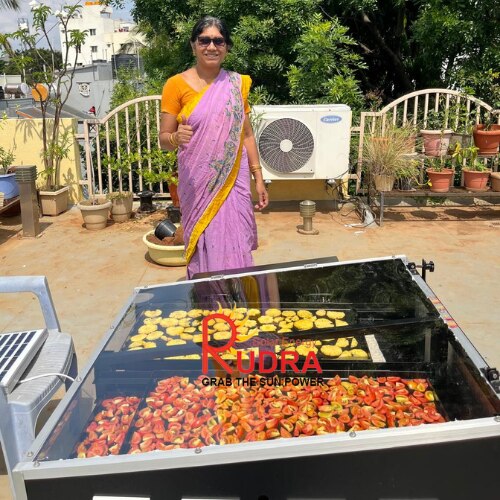
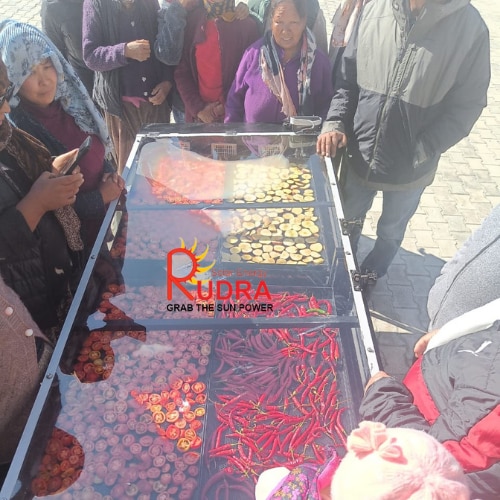
The completed installation provided the client with a dedicated solar drying setup for herbal raw materials, allowing leafy products to be processed inside an organised tray-based drying environment. The system supported improved control over tray loading, airflow distribution and batch handling compared with directly spreading the herbs in an open area. It also allowed the processor to adapt loading and operating practices according to different herbal materials rather than treating every batch identically. Actual drying performance remains dependent on the type of herb, starting moisture, layer thickness, loading density, airflow, humidity, solar radiation and the required final moisture level. For Rudra Solar Energy, the project demonstrates application experience in solar drying of herbs and lightweight plant materials, complementing its broader solar dryer product range.
What we did:
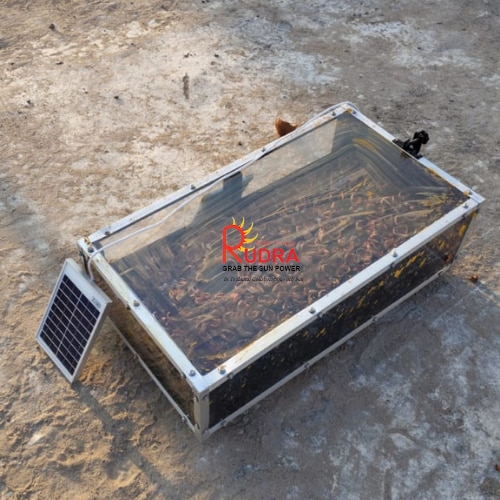
Instead of sizing the system only by batch weight, Rudra Solar Energy evaluated the application based on herb volume, tray occupancy and airflow requirement. The drying chamber was arranged to support thin and distributed tray loading so that the plant material would not unnecessarily block the airflow path. The project approach included: enclosed tray-based drying arrangement controlled/forced airflow through the drying chamber suitable spacing between loaded trays planning around lightweight herbal material food-contact drying surfaces batch-wise loading and unloading operating guidance according to product behaviour solar-based moisture removal with configuration selected for the processing requirement Depending on the selected Rudra configuration, solar-powered DC fans may be used to support forced airflow. Exact materials, tray specifications and construction depend on the model supplied for the project.

Project Description

Herbs and leafy plant materials require a drying approach that is different from dense fruits, vegetables or grains. This project was developed for a herbal-processing application where the client required an enclosed solar herb dryer capable of handling lightweight plant material across organised drying trays. The primary engineering challenge was maintaining effective air movement through the herb layer without excessive tray loading. Herbs can occupy a relatively large tray area despite having lower batch weight, so dryer selection needs to consider usable drying area and airflow, not only kilograms per batch. Rudra Solar Energy configured the system around the client's herbal-processing workflow, with emphasis on controlled moisture removal, tray utilisation and an enclosed drying environment. Suitable herbs may require different preparation and drying conditions depending on leaf structure, starting moisture, loading density and the required final moisture level. Therefore, the system was planned around the application rather than using one fixed drying schedule for every herbal material.