
Agricultural Seed Processing Enterprise
Solar Dryer for Seed Processing | Agricultural Seed Drying Project
- Customer:
- Agricultural Seed Processing Enterprise
- Project Category:
- Seed Processing & Agricultural Input Industry
- Customer Requirement:
- The client processed agricultural seeds from different crop categories and needed a more organised seed drying system before selected batches entered storage or subsequent processing. The primary requirement was to manage variation between seed batches. Seeds can differ in: Initial moisture Seed size Bulk density Drying sensitivity Layer depth Airflow requirement Storage requirement Intended planting or processing use The client therefore required a system that allowed individual batches to be identified and handled according to their specific characteristics. The facility needed: Controlled batch loading Suitable drying area Organised airflow Temperature monitoring Moisture assessment Separate seed batches Easy loading and unloading Flexible operation for different suitable agricultural seeds Optional backup configuration where the process required it A major requirement was avoiding the assumption that every seed should be dried to the same moisture level or under the same temperature conditions. FAO seed-storage guidance emphasises that seed moisture requirements vary considerably between species, and some seeds tolerate drying far better than others.
- Project Result:
- The project established a dedicated solar seed drying stage within the client’s agricultural seed-processing facility. Instead of using one fixed process for every incoming batch, the operating team could follow: Seed Type → Initial Moisture → Batch Quantity → Loading Depth → Airflow → Temperature / Drying Requirement → Final Moisture → Storage or Further Processing This gave the processor a more structured method for managing suitable seed batches before subsequent seed-handling operations. The project also created clearer separation between ordinary agricultural-product drying and seed processing, where moisture reduction may need to consider subsequent planting performance and storage requirements. For commercial equipment selection, the enterprise could evaluate: Normal seed quantity per batch Usable drying area Seed-bed depth Airflow arrangement Moisture measurement requirement Temperature control Number of batches per day Storage schedule Optional backup requirement This project is relevant to: Seed-processing enterprises Seed producers Seed companies FPOs and FPCs Agricultural cooperatives Seed production farms Agricultural research organisations Seed multiplication programmes Agricultural-input businesses Post-harvest seed-processing centres Commercial Seed Drying Equipment Selection A commercial buyer evaluating a seed drying machine should not select equipment only from its nominal kilogram capacity. The buyer should first establish: What type of seed will be processed? Is the seed intended for sowing or another use? What is the incoming moisture condition? What final moisture specification is required? How sensitive is the seed to temperature and drying rate? How much material is processed per batch? How deep will the loaded seed layer be? How will air move through the batch? How will seed moisture be measured? These questions help determine whether solar drying is appropriate and what system configuration is required. Solar Dryer for Agricultural Seed Processing A solar dryer for agricultural seed processing may support different technically suitable seed categories in separate batches. Depending on the actual seed-processing operation, these may include appropriate: Cereal seed batches Pulse seed batches Oilseed batches Vegetable seeds Other compatible agricultural seeds However, multi-seed processing should never mean one standard drying setting for all of them. Whenever the seed changes, the processor should reassess: Moisture condition Drying sensitivity Loading depth Airflow Temperature Drying rate Final moisture specification Storage requirement This allows a commercial solar dryer to remain flexible without ignoring seed-specific processing requirements. Solar-Primary and Optional Hybrid Configuration Solar radiation and surrounding environmental conditions influence solar drying. Where processing schedules allow flexibility, a solar-primary system may support suitable seed-drying operations. Where the processing facility requires additional operating flexibility, an appropriate hybrid solar dryer or backup-assisted configuration may be evaluated. The decision should depend on: Seed type Drying sensitivity Production schedule Batch quantity Local operating conditions Required processing continuity Suitable temperature requirements Backup heating should not automatically be used for every seed. Its operation must remain compatible with the specific seed-processing requirement.
- What we did:
- The project was organised around a seed-specific drying workflow. Each incoming batch was first identified according to seed category, incoming condition and intended downstream use. Rather than mixing different seed types into one operating programme, batches were kept separate. The processing sequence was structured as: Incoming Seed Batch → Batch Identification → Required Cleaning / Preliminary Handling → Moisture Assessment → Controlled Loading → Solar-Assisted Moisture Reduction → Moisture Reassessment → Cooling / Conditioning → Grading, Storage or Further Seed Processing The solar dryer configuration was evaluated using: Seed type Initial moisture Batch quantity Available drying area Seed-bed depth Airflow Temperature Ambient humidity Required final moisture Storage or downstream requirement Controlled Seed-Bed Loading Agricultural seeds can form a dense layer when loaded for drying. Increasing the quantity inside the same drying area also increases the product-bed depth, which can change how easily air moves through or around the seed. For this reason, the project did not define capacity only as: maximum kilograms inside the dryer. The loading approach also considered: batch weight + drying surface + seed-bed depth + airflow This allowed the operating team to plan batches according to the physical behaviour of the seed rather than only machine capacity. Airflow Was Treated as Part of Moisture Control During drying, moisture leaving the seed enters the surrounding air. That air becomes increasingly humid and must move away from the loaded material for moisture reduction to continue. The project therefore treated solar-assisted heat and organised airflow as connected parts of the drying process. Operators were required to avoid unnecessarily deep or compact loading where it could restrict air movement. This is particularly important in a seed drying machine, where the objective is controlled moisture management rather than simply rapid heating. Temperature and Drying Rate Were Kept Seed-Specific One universal temperature or drying duration was not assigned to every seed batch. ICAR research shows that the rate of seed drying can influence seed viability, particularly for drying-sensitive or recalcitrant seeds. Some seed categories can lose viability if they are dried too aggressively. Therefore, operating decisions needed to consider: Seed species Seed physiology Initial moisture Required final moisture Temperature sensitivity Drying rate Ambient conditions Storage specification The project did not claim that solar drying automatically maintains germination percentage or seed vigour. Where seeds were intended for planting, appropriate seed-quality testing remained necessary. Not Every Seed Should Be Dried in the Same Way One of the most important technical rules established for the project was that “seed” is not one uniform drying commodity. Many conventional agricultural seeds can undergo controlled moisture reduction before suitable storage. However, some recalcitrant seeds are sensitive to moisture loss and may lose viability when dried below their physiological tolerance. ICAR, for example, documents jackfruit seed as recalcitrant and susceptible to viability loss when dried. For this reason, the solar dryer should only be used where drying is appropriate for the specific seed and intended use. This commodity-specific decision is more important than simply determining whether the seed physically fits inside the dryer. Seed Processing Remained a Multi-Step Operation The solar dryer was integrated into a larger seed-processing workflow. Drying itself did not replace: Cleaning Grading Seed testing Seed treatment Coating Sorting Certification Packaging Storage management These remained separate operations according to the processor’s requirements. The solar dryer’s role was specifically to support controlled moisture reduction from suitable seed batches.
Project Description
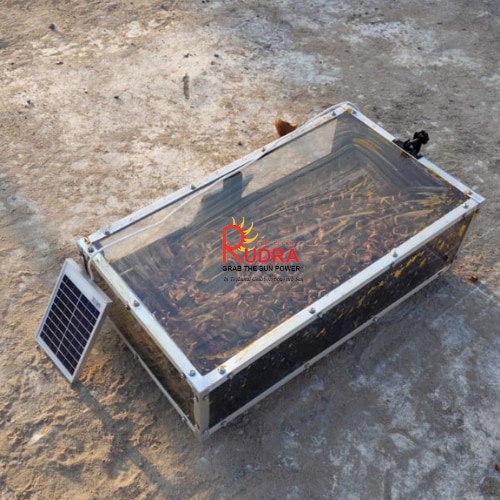
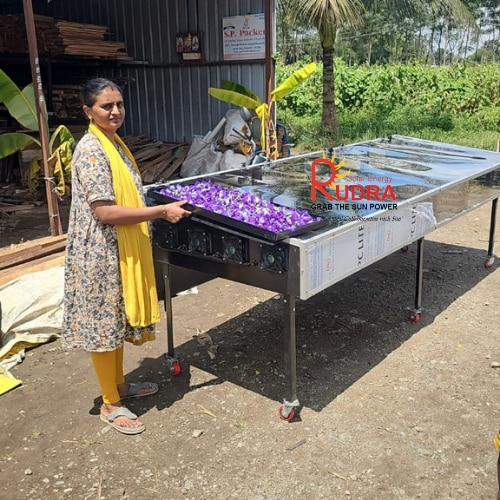
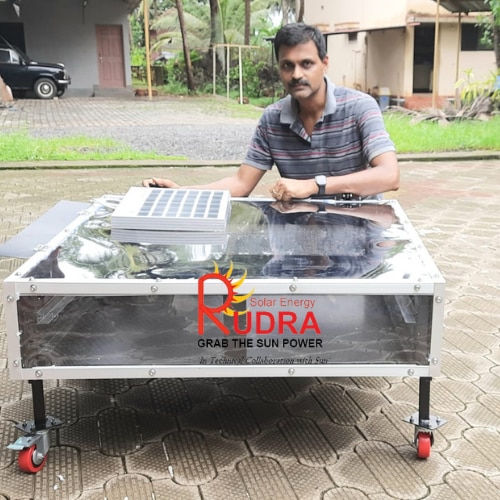
An agricultural seed-processing enterprise required a solar dryer for seed processing to support controlled moisture reduction from suitable seed batches before storage, grading or further seed-handling operations. Seed processing requires a different approach from ordinary food or commodity drying because seeds intended for sowing must be handled according to their individual moisture and temperature sensitivity. Excessive drying, unsuitable temperature or an inappropriate drying rate can affect seed quality and viability in some species. For this reason, the project was developed around controlled agricultural seed drying, batch identification, appropriate loading depth, airflow and moisture assessment rather than simply applying the highest possible drying temperature. The system was intended for technically suitable agricultural seed batches handled by the processor, with operating conditions adjusted according to the seed type and required storage or processing specification. The solar dryer performed the moisture-reduction stage only. Cleaning, grading, seed treatment, coating, testing, packaging and certification remained separate seed-processing operations.