
Commercial Cash Crop Processing Enterprise

Solar Dryer for Cash Crops | Commercial Agricultural Processing Project
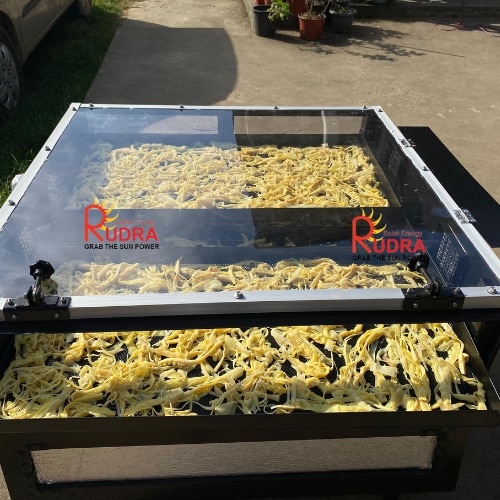
Solar Dryer for Cash Crops | Commercial Agricultural Processing Project — main image

Solar Dryer for Cash Crops | Commercial Agricultural Processing Project — image 2
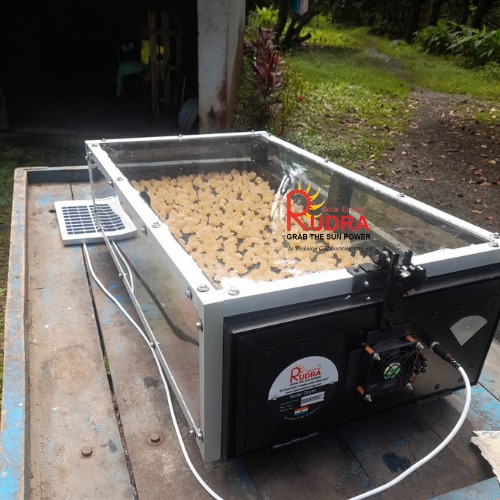
Solar Dryer for Cash Crops | Commercial Agricultural Processing Project — image 3
Customer:
Commercial Cash Crop Processing Enterprise
Project Category:
Cash Crop & Agricultural Processing Industry
Customer Requirement:
The client sourced different cash crops during the year and required a commercial solar dryer that could support changing agricultural batches without relying on one standard operating condition. The main requirement was processing flexibility. Different cash crops could enter the facility with very different combinations of: Initial moisture Product size Physical structure Preparation Batch quantity Loading density Drying-surface requirement Airflow requirement Required final moisture condition The client therefore needed a system that could support separate commodity batches while allowing tray loading, airflow and operating conditions to be adjusted according to the actual product. The system also needed to fit into a commercial workflow where the drying stage could be followed by storage, grading, milling, grinding, packaging or another appropriate operation.
Project Result:
The project established a dedicated solar drying stage for commercial cash-crop processing. The enterprise gained a more structured method for handling different suitable crops while keeping each batch linked to its own processing requirement. The operating framework became: Cash Crop → Incoming Condition → Preparation → Batch Quantity → Loading → Airflow → Moisture Endpoint → Next Processing Stage This approach allowed the facility to use one suitable commercial drying platform across multiple seasonal applications without treating every crop identically. The project also created a clearer basis for future capacity planning. Instead of evaluating equipment only through nominal kilograms per batch, the processor could also consider: Usable drying area Product form Loading depth Airflow arrangement Peak-season quantity Number of batches per day Processing schedule Need for optional backup Downstream workflow The project is relevant to: Cash-crop processing enterprises FPOs and FPCs Agricultural cooperatives Agro-processing MSMEs Spice and plantation-crop processors Rural processing centres Post-harvest value-addition projects Commercial agricultural processors Commercial Solar Dryer for Cash Crop Processing A commercial solar dryer used for cash crops should be selected according to the actual agricultural material and production scale. A processor handling smaller seasonal batches may require a different configuration from an aggregation centre receiving material from multiple growers. Useful selection questions include: What cash crop will normally be processed? How much material arrives per batch or per day? What form enters the dryer? How much drying surface is required? How should air move through the loaded batch? How many batches are required during peak season? Is solar-primary operation sufficient? Is optional backup required for the production schedule? These questions provide a stronger basis for equipment selection than capacity alone. Solar Dryer for Agricultural Products Cash-crop processing sits within the wider requirement for a solar dryer for agricultural products. A suitable system can potentially support different compatible agricultural commodities in separate batches, but multi-product use should always remain commodity-specific. The operator may need to change: Preparation Loading pattern Layer depth Tray utilisation Temperature Airflow Drying endpoint Cleaning between batches whenever the processed material changes. This flexibility can be particularly relevant to commercial agricultural businesses that receive different crops across the year. Solar-Primary and Hybrid Processing Options Solar radiation and ambient conditions influence the solar drying process. Where the production schedule is flexible, solar-primary operation may suit the application. Commercial processors requiring additional operating flexibility can evaluate an appropriate hybrid solar dryer or backup-assisted configuration. The decision should be based on actual production requirements, including: Commodity Processing season Daily quantity Weather conditions Production schedule Required operating flexibility No one configuration should automatically be treated as suitable for every cash-crop business.
What we did:
The project was developed around a simple principle: The cash crop determines the drying process — not the other way around. Instead of assigning one universal programme to every batch, incoming agricultural material was first identified according to commodity, physical form and moisture condition. For dense rhizome-based material, preparation and product thickness could influence moisture movement. For spice-type materials, product-bed depth and airflow became important. For larger prepared agricultural materials, usable drying area and tray distribution required greater attention. The operating sequence was structured as: Incoming Cash Crop → Commodity Identification → Required Preparation → Moisture Assessment → Batch Planning → Controlled Loading → Solar-Assisted Moisture Reduction → Endpoint Assessment → Cooling → Storage or Further Processing The project placed particular emphasis on loading discipline. Commercial operators often focus first on the maximum number of kilograms a dryer can hold. However, useful drying capacity also depends on how the material occupies the available drying area. A deeper or more densely packed batch can create different airflow conditions from a properly distributed load. For this reason, batch planning considered: Commodity type Normal quantity Available drying area Product thickness or bed depth Airflow path Operating temperature Ambient humidity Required final moisture Expected daily throughput Air movement was treated as part of the moisture-removal process rather than as a secondary feature. As moisture leaves the agricultural material, the surrounding drying air becomes more humid. Effective operation therefore requires an appropriate route for moisture-laden air to move away from the loaded product. The client was also advised not to use one fixed drying duration for all cash crops. Actual drying behaviour can change with the commodity, initial moisture, preparation, loading, solar radiation, temperature and humidity.

Project Description

A commercial agricultural processing enterprise required a solar dryer for cash crops to create a more organised moisture-reduction stage for selected high-value agricultural materials handled across different harvest periods. Cash crops are a broad category, and not every cash crop is suitable for the same drying process. Materials used for spice, plantation and value-added agricultural processing can differ substantially in initial moisture, physical structure, bulk density, preparation and downstream use. The project was therefore planned around commodity-specific solar drying within a commercial cash-crop processing workflow, rather than treating every agricultural product as though it required the same temperature, loading depth or drying duration. Suitable batches could include selected drying-relevant cash crops and agricultural materials such as chilli, turmeric, ginger, black pepper, coconut/copra and other compatible produce, depending on the client’s actual processing requirement. The solar dryer was used specifically for moisture reduction. Cleaning, curing, peeling, cutting, grading, grinding, oil extraction, packaging and other downstream operations remained separate stages where applicable.