
Multi-Crop Agro Processing Enterprise

Solar Dryer for Agricultural Products | Multi-Crop Agro Processing Project

Solar Dryer for Agricultural Products | Multi-Crop Agro Processing Project — main image
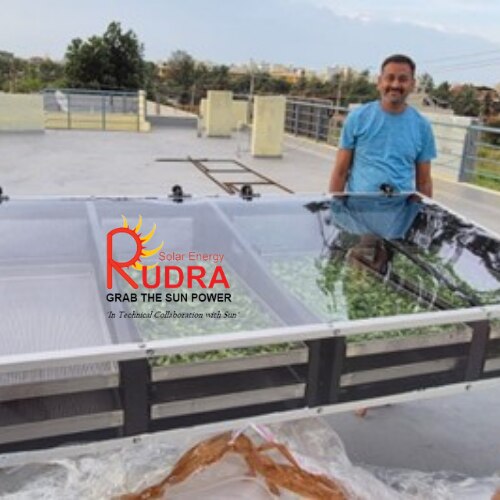
Solar Dryer for Agricultural Products | Multi-Crop Agro Processing Project — image 2
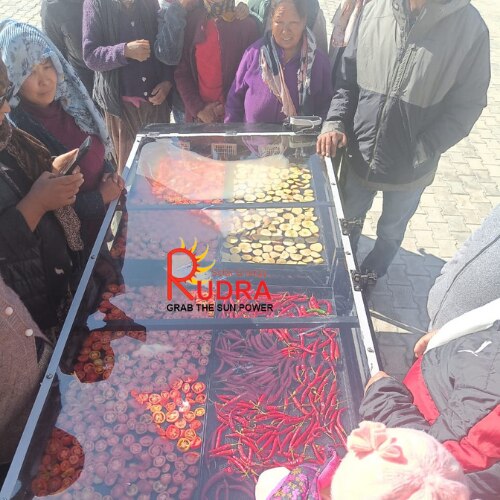
Solar Dryer for Agricultural Products | Multi-Crop Agro Processing Project — image 3
Customer:
Multi-Crop Agro Processing Enterprise
Project Category:
Agricultural Processing Industry
Customer Requirement:
The client required a multi-purpose agricultural solar dryer capable of supporting different suitable farm products instead of being limited to a single commodity. The processing requirement included seasonal changes in product type, fresh batch quantity and preparation. The client therefore needed a system that could accommodate variations in: fruits and vegetables spices and herbs grains and pulses seeds and other suitable agricultural produce fresh input quantity product size and thickness tray loading density airflow requirement seasonal weather conditions The client also wanted an enclosed drying environment to reduce direct exposure of loaded material to dust and insects compared with fully open drying. A major requirement was operational flexibility: the same processing infrastructure needed to support different commodities while allowing the drying procedure to be adjusted for each product.
Project Result:
The project provided the client with a flexible multi-crop solar drying platform for handling suitable agricultural produce across different seasons. Instead of requiring a separate drying setup for every commodity, the processing enterprise could organise different product batches within one system while adapting loading and operating conditions according to the material being dried. The project also created a more technically structured approach to capacity planning. Rather than evaluating a solar dryer only by asking: “How many kilograms can it hold?” the processor could evaluate: How much usable tray area is available? What product is being dried? How is the product prepared? How densely can it be loaded? How will heated air move through the chamber? What moisture condition is required before further handling? This makes the project relevant for farmers, FPOs, SHGs, cooperatives and agro-processing businesses that handle multiple agricultural commodities instead of operating around only one crop.
What we did:
Rudra Solar Energy planned the project around the actual multi-crop processing workflow rather than choosing the system only from its external size or stated capacity. The project design considered the client’s normal fresh input quantity, product types, usable tray area and expected seasonal production schedule. The drying workflow was structured as: Product Preparation → Controlled Tray Loading → Solar-Assisted Heating → Managed Airflow → Moisture Removal → Drying Endpoint Assessment → Cooling → Further Handling Particular attention was given to tray loading because overloading can restrict the movement of heated air around the product. Tray spacing and airflow distribution are recognised design considerations in solar drying systems. For different agricultural commodities, the operating approach could then be adjusted according to: initial moisture product thickness product density tray loading temperature requirement airflow requirement ambient humidity desired final moisture Where relevant to the selected configuration, Rudra systems can incorporate an enclosed chamber, controlled or forced airflow, solar-powered DC fans and optional hybrid or backup support. The client team was also guided to avoid treating multi-product capability as one universal drying recipe. A fruit batch, a leafy herb batch and a grain or seed batch may require substantially different loading and drying conditions.

Project Description

Rudra Solar Energy developed a solar dryer for agricultural products for a multi-crop processing requirement involving different farm commodities across seasonal production cycles. Agricultural drying is not a one-setting process. Fruits, vegetables, spices, herbs, grains, pulses, seeds and other suitable farm produce can differ significantly in initial moisture, physical structure, preparation, loading density and desired final moisture. For this reason, the project was planned around usable tray area, product loading, airflow and batch flexibility rather than relying only on a nominal kilogram capacity. The solar drying system was intended to create an enclosed and organised environment for moisture reduction while allowing the processor to adapt operating conditions according to the commodity being handled. Research on solar drying also highlights the importance of tray configuration and adequate airflow around the loaded product, supporting this application-focused approach.