
Ayurvedic Botanicals Processing Enterprise

Rudra Solar Herb Dryer for Medicinal & Ayurvedic Raw Material Processing
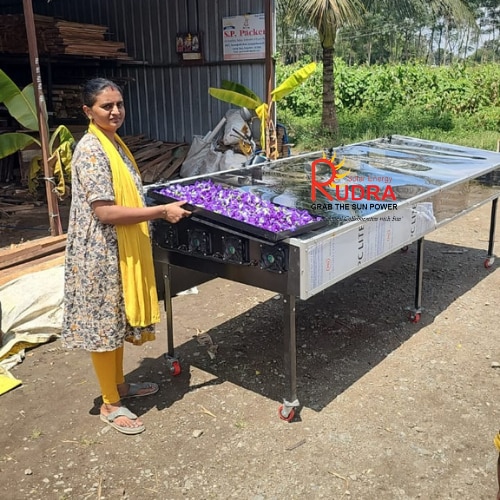
Rudra Solar Herb Dryer for Medicinal & Ayurvedic Raw Material Processing — main image
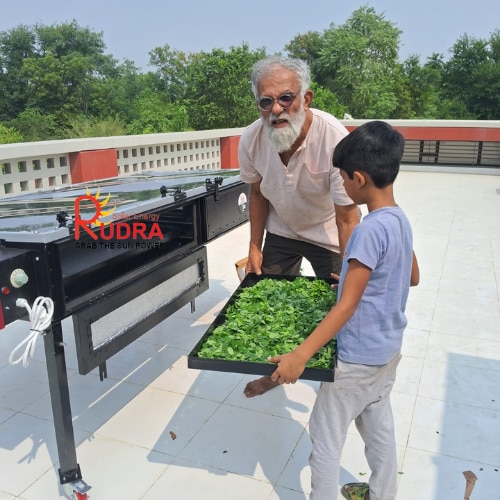
Rudra Solar Herb Dryer for Medicinal & Ayurvedic Raw Material Processing — image 2
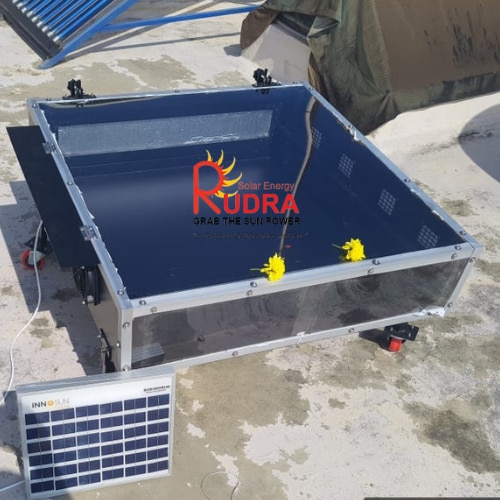
Rudra Solar Herb Dryer for Medicinal & Ayurvedic Raw Material Processing — image 3
Customer:
Ayurvedic Botanicals Processing Enterprise
Project Category:
Medicinal Plants & Herbal Raw Material Processing Industry
Customer Requirement:
The processing unit handled several botanical raw materials through the year and needed equipment that could adapt when the product changed. A leafy material such as tulsi or neem could not be loaded in the same manner as ashwagandha root, ginger, turmeric or other dense botanical material. The client therefore wanted a medicinal plant solar dryer that could support different batch types without assuming that every product had identical moisture behaviour. The key requirement was to create a system where the operator could manage the relationship between raw-material form, tray area, loading depth, air movement and required moisture endpoint. The client also needed an enclosed chamber to reduce direct outdoor exposure of the loaded material and a practical arrangement for cleaning and changing between different herbal batches. Because production requirements could vary seasonally, the system also needed scope for appropriate solar-only or backup-assisted operation depending on the final configuration.
Project Result:
The project established a dedicated solar herb dryer workflow for medicinal and Ayurvedic raw materials, giving the processing unit a more structured way to handle different botanical batches within one processing infrastructure. The main operational improvement was flexibility. Leafy herbs could be loaded according to their own tray and airflow requirement, while roots or denser botanical material could be processed using a different preparation and loading approach. This reduced the need to treat every medicinal plant as though it behaved identically inside the dryer. The project also created clearer batch discipline around product identification, tray loading, drying endpoint and changeover between different raw materials. For an Ayurvedic or herbal-processing business, this is particularly relevant because the raw-material category itself may vary considerably. NMPB’s official medicinal-plant resource includes plant materials ranging from leaves and roots to bark, flowers, fruits, seeds and whole plants, reinforcing the need for plant-specific handling rather than one generic process. The resulting system is suited to buyers such as herbal raw-material processors, medicinal-plant growers, Ayurvedic processing units, FPOs, botanical ingredient businesses and institutional projects that need a commercial solar herb dryer with multi-product operating flexibility.
What we did:
Rudra Solar Energy approached this project as a herbal raw-material processing solution, not simply as a generic dryer installation. First, the expected raw materials were grouped according to physical behaviour. Lightweight leaves and flowers were treated differently from roots, rhizomes, stems and other denser materials. This mattered because bulk density, exposed surface area and resistance to airflow can change significantly between plant parts. The dryer configuration was then planned around usable tray area and controlled product distribution. Instead of maximising kilograms on each tray, the operating approach prioritised sufficient exposure of the material to moving heated air. For suitable batches, the processing sequence was organised as: Raw-material identification → required preparation → batch separation → tray loading → solar-assisted moisture removal → endpoint assessment → cooling → further processing or storage. The enclosed chamber and airflow system were used to support moisture removal from the product while allowing moisture-laden air to move away from the trays. Where applicable to the selected Rudra configuration, forced airflow and solar-powered DC fans can support air circulation. Exact construction material, fan specification and backup arrangement depend on the model supplied rather than being assumed identical across every Rudra dryer. The operating guidance also avoided a universal temperature claim. Rudra’s current public herb-dryer page promotes herb and medicinal-plant applications, but for stronger technical accuracy this project treats temperature and drying duration as material-dependent operating parameters, not one fixed recipe for all medicinal plants.

Project Description

A herbal-processing enterprise needed a dedicated solar herb dryer for handling medicinal and Ayurvedic raw materials with very different physical characteristics. This was not treated as a standard fruit or vegetable dryer application. Medicinal-plant processors may handle delicate leaves, dense roots, rhizomes, flowers, stems, bark, seeds and whole-plant material. India’s National Medicinal Plants Board resources similarly distinguish medicinal raw materials by the specific plant part used, including tulsi leaf, ashwagandha root, arjuna bark, hibiscus flower and giloy stem. Rudra Solar Energy therefore configured the project around product-specific tray loading, controlled airflow, enclosed processing and batch flexibility rather than prescribing one temperature or one drying time for every herb. The objective was to provide an organised solar-assisted moisture-removal system suitable for an Ayurvedic and herbal raw-material workflow while keeping cleaning, cutting, grinding, extraction, formulation, packaging and storage as separate processing stages.