
Premium Nuts & Dried Foods Processing Enterprise

Dry Fruits & Nuts Processing Unit with Rudra Solar Dryer
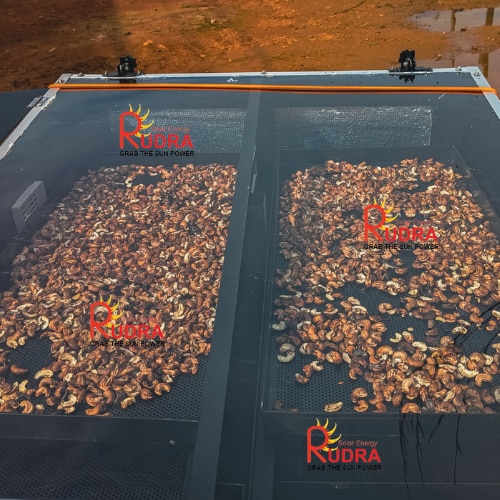
Dry Fruits & Nuts Processing Unit with Rudra Solar Dryer — main image
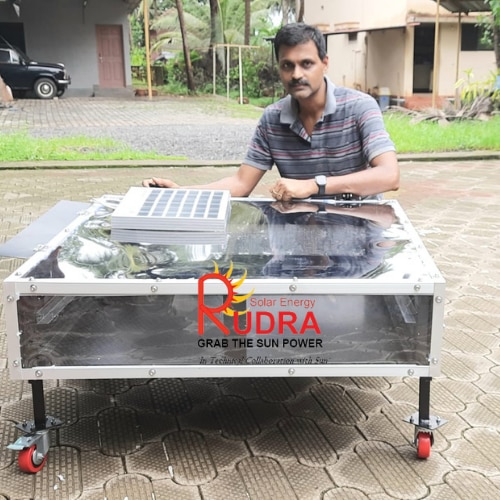
Dry Fruits & Nuts Processing Unit with Rudra Solar Dryer — image 2
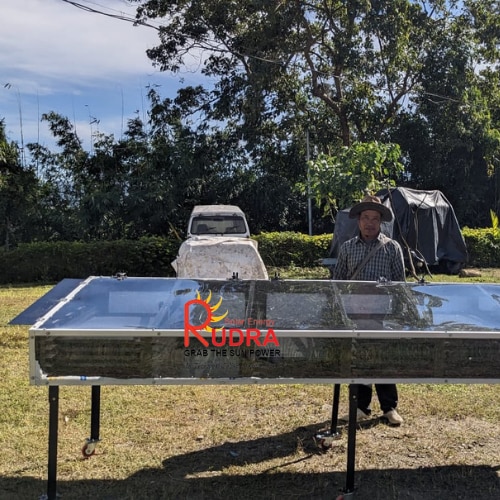
Dry Fruits & Nuts Processing Unit with Rudra Solar Dryer — image 3
Customer:
Premium Nuts & Dried Foods Processing Enterprise
Project Category:
Dry Fruits & Nuts Processing Industry
Customer Requirement:
The client handled different dry-fruit and nut categories and wanted one professional processing system that could accommodate changing products across the production calendar. The main requirement was flexibility without mixing operating conditions. Fresh or prepared fruit intended for dehydration could require a very different process from nuts that only needed further moisture reduction or conditioning before subsequent handling. The client therefore required the system to accommodate suitable batches involving products such as: figs dates selected dried-fruit preparations almonds walnuts cashew-related suitable materials other compatible nuts and premium food ingredients The processor also wanted: sufficient usable tray area for commercial batches; organised product separation; adjustable loading according to product size; effective movement of heated air through the chamber; an enclosed processing environment; flexibility for different seasonal products; provision to evaluate hybrid or backup operation where production schedules required it. The client specifically needed a food-processing machine selected around actual batch behaviour, not merely the largest quoted kilogram capacity.
Project Result:
The project provided the processing enterprise with a dedicated Rudra solar dryer platform for dry-fruit and nut applications, allowing different suitable premium food products to be processed in separate controlled batches. The main operational advantage was not simply multi-product capability. The processor gained a more useful way of planning each batch around: Product type — fruit-based material or nut. Fresh/input condition — how much moisture the material contains when loaded. Product dimensions — whole, sliced or otherwise prepared. Tray utilisation — how much usable surface is required. Loading depth — whether the product can be distributed without obstructing air movement. Airflow — how heated air reaches and moves around the product. Endpoint — what condition is required before cooling and further handling. This approach makes the system relevant to dry-fruit processors, nut-processing enterprises, food-processing MSMEs, FPO processing centres, premium ingredient manufacturers and businesses developing value-added food products. It also gives Rudra a differentiated commercial application. Raheja currently promotes nuts within broader fruit, herb and spice applications, while Rudra can demonstrate a dedicated project around the distinct processing requirements of dry fruits versus nuts, rather than grouping all products under one generic use case.
What we did:
Rather than using a single standard operating pattern, Rudra Solar Energy divided the project into product families. High-Moisture Fruit-Based Batches Prepared figs, dates or other suitable fruit materials can require substantial moisture removal. For these batches, the operating focus was placed on: product preparation → piece size → spacing → exposed surface area → tray loading → airflow → moisture endpoint. Uniform preparation was encouraged because large differences in product thickness can create uneven moisture removal within the same batch. Nut-Based Batches Almonds, walnuts, cashew-related materials and other nuts were approached separately. Dense nut material behaves differently from sliced fruit, so loading density, airflow resistance and required endpoint should be established according to the specific nut and its intended subsequent use. No universal drying temperature or moisture target was assigned to every nut category. Tray Utilisation Planning The processing capacity was evaluated not only by kilograms but also by usable tray surface area. This distinction is especially important for products that need spacing rather than deep bulk loading. More kilograms placed onto a tray do not automatically mean more useful processing capacity if airflow between products becomes restricted. Controlled Air Movement The system was organised so solar-assisted heated air could move through the loaded chamber while moisture-laden air was removed from the processing environment. Depending on the selected Rudra configuration, relevant systems can incorporate an enclosed chamber, controlled or forced airflow and solar-powered DC fans. Rudra's current public product inventory includes dedicated products for dates and figs as well as broader commercial solar-dryer configurations. Product Changeover Because this was a multi-product facility, the processing workflow also considered changeover between fruit-based and nut-based batches. The operating sequence was structured around: Product Identification → Preparation Where Required → Batch Loading → Solar Dryer Operation → Moisture Assessment → Cooling → Grading/Packaging or Further Processing This keeps the actual role of the solar dryer clear: the equipment supports moisture removal; it does not automatically perform cutting, shelling, roasting, grinding, grading or packaging.

Project Description

A premium food-processing enterprise required a solar dryer for dry fruits and nuts that could support multiple product categories within one organised processing setup. The requirement was different from ordinary fruit or vegetable processing. Fresh fruit intended to become a dried product—such as fig, date or selected fruit slices—can begin with comparatively high moisture, while nuts such as almond, walnut or cashew may enter the dryer in a very different physical and moisture condition. For this reason, Rudra Solar Energy configured the project around separate product batches, usable tray area, loading depth, controlled airflow and product-specific moisture targets rather than treating “dry fruits and nuts” as one uniform material. The resulting setup was intended for a commercial processor that needed a flexible solar food dryer for premium food ingredients while maintaining clear separation between preparation, moisture removal, cooling, grading and packaging.